





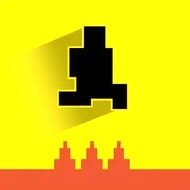








Vex 6










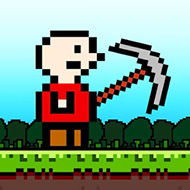

What actually kills you more often in Vex 6 — the saw blade you saw coming, or the one you didn’t know was timed to your exact jump? Most players learn the hard way that it’s almost always the second one, and that single realization is what separates a slow first Act from a confident run through the later Hard Acts.
| Genre | Precision Platformer / Parkour |
| Structure | 9 Acts, 9 Hard Acts, plus the Vexation finale |
| Core Moves | Run, jump, slide, wall-jump, grappling hook |
| Extra Mode | Tower of Terror (endless climb) |
Vex 6 puts you in control of the series’ stickman through nine brand-new Acts, each one ending in a punishing final stage called Vexation. The early levels ease you into the controls, but that grace period is short — by the middle Acts, the game expects fluent use of every tool it’s given you, chained together without hesitation.
The Moveset That Defines Vex 6
- Wall-jumping to reach ledges too high for a standing jump
- Sliding to pass beneath low obstacles without breaking momentum
- A grappling hook for gaps too wide to clear on foot
- Instant-response controls with no noticeable input lag at 60fps
None of these moves exist in isolation. A single stretch of level might demand a slide into a wall-jump into a grapple, all inside a couple of seconds, and Vex 6’s difficulty comes almost entirely from how tightly these inputs get chained rather than from any one move being hard on its own.
Traps That Punish Hesitation
Spinning saw blades, laser fields, and disappearing blocks make up the bulk of what’s actually trying to kill the stickman, and all three share a design trait: they punish pausing to think mid-obstacle far more than they punish moving fast. A disappearing block that’s about to vanish doesn’t wait for you to decide — commit late and you’re falling before the decision even registers.
Checkpoints exist to keep failure cheap, not to make the game easy. Death in Vex 6 usually costs a few seconds at most thanks to frequent checkpoints, which is precisely why the level design can afford to be this punishing — the real cost of dying isn’t time lost, it’s the small dent to momentum every restart causes.
Hard Acts Remix What You Already Know
The nine Hard Acts don’t introduce new hazards so much as tighten the timing on everything already familiar from the standard Acts. A saw blade placement that felt generous the first time through can be moved by half a second in its Hard Act counterpart, which is enough to turn a comfortable route into one that demands a completely different rhythm.
Coins, Skins, and the Tower of Terror
For the first time in the series, Vex 6 scatters coins through its levels, and collecting them unlocks skins, daily rewards, and bonus levels rather than just padding out a score. The Tower of Terror mode takes the same trap vocabulary from the story Acts and stretches it into a vertical, endless climb, testing how long a run can hold together once there’s no finish line to aim for.
Do you need to finish all 9 Acts before trying the Hard Acts in Vex 6?
Standard Acts are meant to be cleared first, since the Hard Acts assume the same trap patterns are already familiar — jumping in early tends to feel unfair rather than just difficult.
What’s the fastest way to improve at Vex 6?
Replaying Acts you’ve already cleared, specifically to chain wall-jumps, slides, and grapples without pausing between them, transfers directly to how well the Hard Acts and Vexation stages go later.
Is the Tower of Terror mode separate from the main Acts?
Yes — it’s an endless vertical mode built from the same hazards, meant to be played after you’re comfortable with the core moveset rather than as an introduction to it.
Checkpoints Shape How Aggressively You Can Play
Because a death in Vex 6 rarely costs more than a few seconds, the game can afford level design that would feel unreasonable with harsher penalties. Frequent checkpoints mean a player is encouraged to attempt a tricky sequence at full speed rather than cautiously, since the downside of failure is small enough that caution often costs more time overall than a handful of failed attempts at full commitment would.
That design choice shapes the entire feel of the series. Vex 6 isn’t asking players to be careful — it’s asking them to be precise, which is a meaningfully different skill, and the checkpoint spacing throughout every Act is tuned specifically to reward that distinction.
What the Grappling Hook Changed About the Series
Compared to earlier entries in the Vex series, the grappling hook opens up route options that pure running and jumping never could — a gap that would otherwise require a perfectly timed wall-jump chain can sometimes be crossed with a single, well-aimed grapple instead. Learning where a grapple point exists and isn’t just a decorative background element is part of reading a level in Vex 6 that newcomers to the series often miss on a first pass.
By the time the stickman reaches the final Vexation stage of the last Hard Act, Vex 6 has stopped testing whether you can jump, slide, or grapple individually — it’s testing whether you can do all three without a single wasted half-second, which is the only real skill the entire game has been building toward.
Comments
There are no reviews yet. Be the first one to write one.