



-

Hide and Luig
-

Meccha Hunt
-

Fruit Ninja
-

Toaster Dash
-
Meccha Chameleon 3
-
Meccha Chameleon 2
-

Water Color Sort
-

Stickman Chameleon
-
Paint to Hide!
-
Paint&Seek Online
-

Meccha Obby
-
Paint or Seek: Chameleon Hide Online
-

Hide ‘N Seek!
-

Paint Strike
-

Meccha Chameleon Mobile
-

A Little to the Left
-

Among Us
-

Stickman Hook
Stickman Chameleon





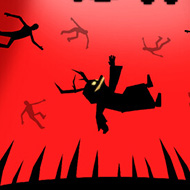





What happens in Stickman Chameleon when your paint job is perfect but your pose gives you away anyway? It’s a question that trips up almost everyone in their first few matches, because the game splits camouflage into two separate skills — color and posture — and most new players only think about one of them.
| Genre | 2D multiplayer hide-and-seek |
| Platform | Browser |
| Round Length | 2-minute hunt |
| Seeker Limit | 3 misses per match |
The Two-Minute Hunt Structure
Every round of Stickman Chameleon runs on a tight two-minute clock, which sounds generous until you realize how much of that time a Hider spends just deciding where to commit. Seekers know the clock is working against them just as much as it works against Hiders, since finding every stickman before time runs out means covering ground fast without skipping suspicious spots. That tension between speed and thoroughness shapes almost every decision in the match.
Hiders who spend the first thirty seconds wandering instead of settling usually end up rushing their paint job, and a rushed paint job is far easier for a Seeker to catch than a slow, deliberate one.
Time pressure is also why so many matches come down to the final ten or fifteen seconds, with a lone surviving Hider holding a pose while a Seeker’s cursor hovers just off to the side.
Wacky Poses and Why They Matter
Stickman Chameleon doesn’t just ask you to stand in a corner — it wants you to strike a pose that actually fits the object you’re pretending to be. A handstand next to an upside-down lamp, a T-pose flattened against a signpost, a curled crouch behind a barrel: the pose has to match the silhouette of whatever you’re hiding as, or the illusion collapses even with a great color match. This is the mechanic that separates Stickman Chameleon from simpler paint-and-hide games, because posture reads visually in a way that flat color alone doesn’t.
- Match your pose to the object’s actual shape, not just its color
- Test a pose before committing your full color palette to it
- Avoid poses that leave limbs sticking out past the object’s silhouette
Players who enjoy the puzzle side of party games tend to spend real time experimenting with pose combinations rather than reusing the same handstand every round.
What Happens If You Get Caught
Getting caught in Stickman Chameleon isn’t necessarily the end of your round the way it is in stricter hide-and-seek formats. Once discovered, you can still run around the map and punch nearby Seekers to stagger them, buying time for any Hiders still holding their camouflage. This turns caught players into an active nuisance rather than a spectator, which is a small design choice that changes how people play the late game — some Hiders deliberately let themselves be found early just to harass Seekers and protect teammates who found stronger spots.
It’s a mechanic community members bring up constantly, since it rewards a kind of sacrifice play that a lot of hide-and-seek games don’t allow for at all.
The Three-Miss Rule for Seekers
Seekers in Stickman Chameleon only get three misses per match before they’re eliminated, and that limit changes how aggressively you can afford to guess. Swinging at empty space because a color looked slightly off is a real gamble once you’re down to your last miss, so experienced Seekers slow down considerably as the counter climbs. This is one of the more debated parts of the game — some players think three misses is too punishing for a fast-paced format and encourages overly cautious Seeker play, while others argue it’s exactly what keeps Hiders from being found through random guessing.
Either way, the miss counter is what stops Seekers from just spam-clicking every suspicious shape on the map.
Reading Cartoonish Environments for Bad Paint Jobs
Because Stickman Chameleon’s environments are deliberately colorful and cartoonish rather than realistic, spotting a bad camouflage job comes down to noticing color banding or a silhouette that’s just slightly too round or too straight compared to the object it’s copying. This is different from more realistic prop-hunt style games, where lighting does a lot of the work; here, the art style means Seekers rely more on shape recognition than shadow detail. Once you’ve played enough rounds as Seeker, you start developing an eye for which corners of a map get overused by Hiders, since certain object types are easier to fake than others.
How do you win as a Hider in Stickman Chameleon?
Survive the full two-minute hunt without being caught by matching both color and pose to a specific object, then holding completely still even if a Seeker walks nearby.
What happens when a Seeker runs out of misses?
They’re eliminated from that round, which is why cautious Seekers double-check a shape before committing to a swing rather than guessing at anything unusual.
Can a caught Hider still affect the round in Stickman Chameleon?
Yes — caught Hiders can run and punch Seekers to stagger them, giving remaining hidden players extra time before the two-minute clock runs out.
Stickman Chameleon earns its replay value from stacking two separate skills on top of each other: color accuracy and pose selection, both of which have to hold up under a strict two-minute timer and a Seeker’s three-miss limit. Whether you’re perfecting a T-pose against a signpost or burning your last miss on a shape that turned out to be furniture, the game keeps every round feeling like it could swing either way in its final seconds.
Comments
There are no reviews yet. Be the first one to write one.