



-

Hide and Luig
-

Meccha Hunt
-
Fruit Ninja
-
Toaster Dash
-
Meccha Chameleon 3
-

Meccha Chameleon 2
-

Water Color Sort
-
Stickman Chameleon
-
Paint to Hide!
-
Paint&Seek Online
-
Meccha Obby
-

Paint or Seek: Chameleon Hide Online
-
Hide ‘N Seek!
-

Paint Strike
-
Meccha Chameleon Mobile
-

A Little to the Left
-

Among Us
-
Stickman Hook
Who Is




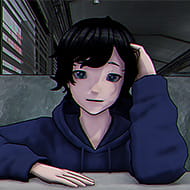





Who Is looks like a cute cartoon quiz you’d skim in two minutes, but it plays like a lateral-thinking trap that makes you reread the same speech bubble twice before it clicks. Every level drops you into a comic scene where characters talk, and your job is to tap the one who’s lying, wrong, or hiding something the dialogue already gave away.
| Genre | Puzzle, deduction |
| Levels | Over 100 |
| Core Mechanic | Read dialogue, tap the correct suspect |
| Controls | Point and click |
| Extra Tools | Hint, level skip |
Reading the Room in Who Is
The format repeats level after level, but the trick never repeats the same way. One scene asks who is lying, the next asks who is wrong despite sounding confident, and another buries the answer in a pun that clicks once said out loud. That variety is why walkthrough searches get frustrating — a solution for one level says nothing about the next.
Beginners lose most early attempts by answering the question a scene seems to ask instead of the one it’s actually asking. A character might insist they’re right while the art quietly contradicts them, and skipping the art for the text means tapping the wrong suspect.
Wordplay levels generate the most discussion in comment sections. These hide the answer inside a double meaning — someone claims to have been “framed,” and the clue is a literal picture frame nearby. Players who breeze through visual puzzles often stall here, since it’s about catching the joke, not logic.
When Who Is Gets Genuinely Hard
Difficulty doesn’t ramp up smoothly across the 100-plus levels — it spikes unpredictably, one of the more divisive things players bring up about the game. An easy stretch can be followed by one that stumps most people, with no curve to signal what’s next. Some enjoy the unpredictability; others find it uneven next to puzzle games that scale more gradually.
By the time you’ve cleared a few dozen levels, a pattern emerges: the clue almost always sits where you’d skim past, a background object or a line that only matters at the end. Read every scene twice before tapping and your success rate climbs fast.
The hint button and level-skip exist for moments a wordplay scene refuses to click, and using them isn’t a failure state — plenty of players lean on hints for pun-based levels while solving the rest unassisted.
- How do you solve the wordplay levels? Read dialogue out loud and watch for double meanings — the answer is a literal object matching a word used figuratively, like a picture frame after someone says they were “framed.”
- Why does it get hard after easy levels? Difficulty doesn’t climb in a line; gags and wordplay stages appear in no fixed order, so quick levels can be followed by one needing several tries.
- What do the hint and skip options do? Hint nudges you toward the suspect without giving the answer away, while skip bypasses a level — most save it for pun stages, not logic ones.
What keeps people coming back isn’t any single riddle but the satisfaction of spotting a wordplay clue a beat before Who Is confirms it.
Comments
There are no reviews yet. Be the first one to write one.