



-

Hide and Luig
-

Meccha Hunt
-

Fruit Ninja
-

Toaster Dash
-
Meccha Chameleon 3
-
Meccha Chameleon 2
-

Water Color Sort
-

Stickman Chameleon
-

Paint to Hide!
-
Paint&Seek Online
-

Meccha Obby
-

Paint or Seek: Chameleon Hide Online
-

Hide ‘N Seek!
-

Paint Strike
-

Meccha Chameleon Mobile
-

A Little to the Left
-

Among Us
-

Stickman Hook
Paint or Seek: Chameleon Hide Online







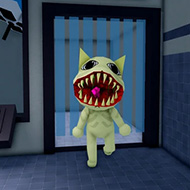




Paint or Seek: Chameleon Hide Online looks like a cute animal game about a color-changing lizard, but it plays like a tense standoff where one wrong shade gives you away. That gap between first impression and actual pressure is most of what makes it stick.
Painting Yourself Into a Wall
The core mechanic is right there in the title: as the hunted Chameleon, you press against a wall or surface and paint yourself to match its color, breaking up your silhouette so the Hunter walks right past. It sounds forgiving in theory, but the timing window is tighter than it looks — merge too early and you’re stuck on the wrong wall when the Hunter changes direction, merge too late and you’re caught mid-transition, which is often worse than not hiding at all.
Choosing between the two roles changes the entire feel of a match. As the Hunter, you’re armed and actively hunting, scanning walls and corners for the telltale edge of a Chameleon that hasn’t quite blended in. As the Chameleon, your only tools are positioning and color-matching, which means every round is a game of reading the Hunter’s patrol pattern rather than relying on reflexes alone.
Newer players often assume the color-matching happens instantly, but there’s a brief transition where the Chameleon’s paint shifts to match the surface, and it takes just a second or two to fully settle — long enough for a sharp-eyed Hunter to catch the flicker if the timing is off. Players who main the Chameleon role learn to start that transition a beat before they actually need to hide, using cover or a corner to mask the moment their color is still catching up.
What Beginners Get Wrong as the Chameleon
New players tend to camouflage against the nearest surface without checking whether it’s actually a color they can match, which defeats the entire point of the mechanic. A wall that’s slightly the wrong shade is arguably worse than no camouflage, since it draws the Hunter’s eye directly to the mismatch instead of blending you into the background.
The other common mistake is staying frozen in one spot for the whole round. Skilled players treat camouflage as a mobile tool, not a permanent hiding place — they’ll blend into one wall, wait for the Hunter’s attention to shift, then relocate to a better position before merging again. That constant repositioning is what separates players who survive to the final seconds from players caught in the first sweep.
A third habit that trips up newcomers is panicking the moment the Hunter gets close, which usually means bolting to the nearest wall regardless of color match. More experienced Chameleons resist that urge and instead read where the Hunter is already looking, since a Hunter mid-turn is a safer moment to reposition than one staring straight down your hiding spot. Cautious players who take this slower, patient approach tend to outlast aggressive players who try to out-sprint the Hunter across open space, since speed alone does nothing against a Hunter who’s already tracking movement.
Playing the Hunter in Paint or Seek
Hunting is less about raw searching and more about pattern recognition. A Chameleon that’s perfectly matched to a wall is nearly invisible at a glance, so experienced Hunters learn to look for subtle texture seams or slight color shifts rather than scanning for an obvious shape. Once you’ve spent time on both sides of the game, you start noticing the same visual tells you used to miss entirely.
Weapons come into play once a Chameleon is spotted, and this is where the game earns its tenser reputation compared to gentler hide-and-seek titles — getting found isn’t just a tag, it’s the end of the round outright. That higher stakes framing is genuinely divisive among players; some appreciate the added tension, while others feel it makes early rounds punishing before you’ve learned the maps well enough to compete.
Hunters who do well tend to work the map methodically rather than sprinting from wall to wall, since a rushed sweep misses the subtle giveaways that separate a real wall from a hidden Chameleon. Community discussion around the Hunter role often centers on this exact tension — players describe it using the shorthand of “reading walls,” a habit that only clicks after enough rounds of getting fooled by a Chameleon who matched the color almost perfectly.
How do you camouflage properly in Paint or Seek: Chameleon Hide Online?
You have to press against a wall or surface whose color closely matches your current paint state, since a mismatched blend is more noticeable than staying in the open. The closer the color match, the harder you are to spot, and holding still through the brief transition window is what actually completes the camouflage rather than just approaching the wall.
Is it better to stay still or keep moving as the Chameleon?
Moving between camouflage spots is generally safer than freezing in one place, because Hunters who don’t find you quickly will eventually return to recheck walls they’ve already passed. Relocating during the moments when the Hunter’s attention is elsewhere, rather than while they’re actively scanning your area, is what keeps repositioning from becoming just as risky as standing still.
What happens when the Hunter finds a hidden Chameleon?
Being spotted typically ends that Chameleon’s round immediately, since the Hunter is armed, which is why repositioning before you’re fully exposed matters more than in lower-stakes hide-and-seek games. There’s no partial penalty or warning stage — the moment the Hunter confirms the mismatch, the round is effectively over for that Chameleon.
Between the color-matching tension and the higher stakes of being caught, Paint or Seek: Chameleon Hide Online turns a familiar premise into something with real bite. Once you’ve learned to read a Hunter’s patrol instead of just picking the nearest wall, the whole rhythm of the game changes.
Comments
There are no reviews yet. Be the first one to write one.