


-

Hide and Luig
-

Meccha Hunt
-
Fruit Ninja
-

Toaster Dash
-
Meccha Chameleon 3
-

Meccha Chameleon 2
-

Water Color Sort
-
Stickman Chameleon
-
Paint to Hide!
-
Paint&Seek Online
-
Meccha Obby
-

Paint or Seek: Chameleon Hide Online
-
Hide ‘N Seek!
-
Paint Strike
-

Meccha Chameleon Mobile
-

A Little to the Left
-

Among Us
-

Stickman Hook
Action Games

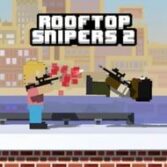



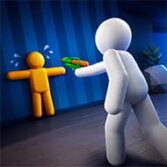

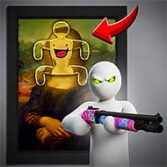







Meccha Chameleon brings together a rotating lineup of fast-paced titles built for players who like quick reflexes and constant motion. The Action Games section groups shooters, platformers, brawlers, and survival challenges into one place, so switching between styles takes seconds rather than minutes.
What Sets This Selection Apart
Every entry in Action Games is picked for pacing rather than polish alone. Levels move quickly, enemies react in real time, and the margin for error stays tight. This category favors mechanics over cutscenes, which means new arrivals rarely feel bloated or slow to start. Instead, most sessions open with a clear objective and a countdown, leaving little room for hesitation.
Because the lineup spans several sub-genres, no two rounds inside Action Games feel identical. One title might ask for precise aim, while the next rewards timing and pattern recognition. That variety keeps the whole category from settling into a single rhythm, and it is part of why Action Games at Meccha Chameleon tends to draw repeat visits rather than a single quick look.
Difficulty curves also vary by title rather than following one shared template. Some entries in Action Games ease players in with a short tutorial stretch, while others drop new arrivals straight into the harder loop and let them adjust on the fly. That contrast keeps the category from feeling uniform, even for players who stick to it exclusively.
Genres and Styles Inside the Category
Rather than sticking to one formula, Action Games mixes several combat and movement styles under a single roof. Players can expect the following formats:
- Top-down shooters with wave-based enemy spawns
- Side-scrolling brawlers built around combo timing
- Platform runners that punish careless jumps
- Arena survival rounds with escalating difficulty
- Stealth-tinted missions that reward patience over brute force
- Vehicle-based chase stages with obstacle-heavy tracks
This spread means a short break can turn into either a calm platforming stretch or a chaotic shootout, depending on what a player picks next. Because none of these formats dominate the category, Action Games avoids the repetition that can creep into a narrower selection.
Skills the Category Puts to the Test
Action Games rewards specific habits more than raw luck. Reflex speed, spatial awareness, and resource management all come into play across different titles. A shooter might test how quickly a player tracks moving targets, while a platformer checks whether jumps are timed to the frame rather than the second.
Some entries also lean on short-term memory, asking players to recall enemy patterns or level layouts after a single glance. Over repeated attempts, this turns trial and error into something closer to muscle memory, which is part of why the category rewards return visits rather than one-off tries.
Hand-eye coordination gets a similar workout, particularly in the shooters and brawlers where a half-second delay can end a round. Meanwhile, the survival stages test patience as much as speed, since knowing when to retreat matters just as much as knowing when to push forward.
Picking a Title Based on Mood
Not every session calls for the same intensity, so Action Games is arranged to cover a range of energy levels. A quick way to narrow the choice:
- Short on time — pick a wave-based shooter with a built-in timer
- Want a slower build-up — try a stealth mission with fewer enemies on screen
- Looking for a challenge streak — choose an arena survival round with rising difficulty
- In the mood for movement — a platform runner keeps the pace physical rather than tactical
- After something unpredictable — a vehicle chase stage adds obstacles instead of enemies
Sorting choices this way turns Action Games into less of a list and more of a menu suited to whatever ten minutes or two hours look like that day. It also means newcomers to the category rarely have to guess where to start.
Getting More Out of Each Attempt
A few habits tend to separate players who clear later stages from those who stall early. Worth keeping in mind while browsing the category:
- Watch enemy movement for a moment before engaging, rather than reacting blind
- Treat early failures as pattern recognition rather than wasted attempts
- Adjust control sensitivity before a session rather than mid-round
- Take short breaks between harder stages to keep reaction time sharp
- Note which stage layouts repeat, since several titles reuse enemy formations
None of this requires prior experience with the genre. Action Games is built so that a first attempt and a fiftieth attempt both feel like progress, just measured differently. Players who track their own patterns tend to improve faster than those who rely on repetition alone.
Who Tends to Enjoy This Category
The audience for Action Games is broader than the name might suggest. Players who enjoy quick decision-making gravitate toward the shooters, while those who prefer methodical planning tend to settle into the stealth and survival entries. Even players who mainly browse other categories often stop here first, since a short round fits neatly between longer sessions elsewhere on the site.
Younger players and casual visitors usually favor the platform runners, since the controls stay simple even when the pace picks up. Meanwhile, players chasing a harder loop lean toward the arena survival rounds, where difficulty increases the longer a run lasts. Competitive types tend to gravitate toward the shooters, comparing scores or clear times against their own past runs.
How the Lineup Keeps Changing
Action Games is not a fixed shelf. New builds rotate in as older ones move to related categories, which keeps repeat visits from feeling stagnant. A shooter added this month might sit next to a brawler that has been part of the lineup for a while, and both get equal visibility rather than being buried under newer additions.
This rotation also means the category rarely leans too heavily on one sub-genre for long. If shooters dominate for a stretch, platformers or survival rounds tend to follow, keeping the overall mix balanced rather than repetitive. Titles that get retired from Action Games are usually folded into adjacent categories rather than removed outright, so a favorite rarely disappears completely.
Fitting a Session Into a Short Break
Many entries in Action Games are structured around short, self-contained rounds rather than long unbroken campaigns. That structure makes the category easy to pick up during a short pause and just as easy to set aside once the round ends, without losing progress or context. A single wave-based shooter round or one platform stage rarely runs long, which suits players who want a defined stopping point rather than an open-ended session.
Longer stretches work just as well, since stacking a few rounds back to back naturally builds toward the harder stages further into a title. Either approach fits the category without requiring a different mindset going in.
Taken together, Action Games works best as a category to return to rather than clear in one sitting. The mix of shooters, platformers, brawlers, and survival rounds means there is almost always a title that matches the mood of the moment, whether that calls for five focused minutes or a longer stretch of trial and improvement.