


-

Hide and Luig
-

Meccha Hunt
-

Fruit Ninja
-

Toaster Dash
-
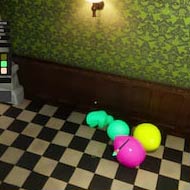
Meccha Chameleon 3
-

Meccha Chameleon 2
-

Water Color Sort
-

Stickman Chameleon
-

Paint to Hide!
-

Paint&Seek Online
-
Meccha Obby
-

Paint or Seek: Chameleon Hide Online
-

Hide ‘N Seek!
-

Paint Strike
-

Meccha Chameleon Mobile
-

A Little to the Left
-

Among Us
-

Stickman Hook
Meccha Chameleon 3








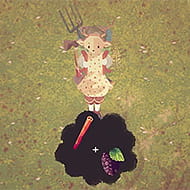



The third ChromaCore Crystal in Meccha Chameleon 3’s Prism Cascade zone does not stay where it appears. It shifts two tiles to the right while Meccha is mid-approach, and if the player has already committed to the left routing, the Crystal collection fails. This detail — that the game’s collectible items are not stationary — is the single most important thing to understand about Meccha Chameleon 3 before playing it. Everything in this sequel moves. The gates move. The power-ups move. The Crystal positions shift. Meccha Chameleon 3 keeps the same color-switching foundation and replaces the fixed-position world with one in constant motion.
Dynamic Gate Movement — What Changed
In Meccha Chameleon 3, gates are not simply positioned ahead of Meccha on a fixed track. Gates move. A Lateral Glide Gate slides left and right across the running corridor on a fixed oscillation cycle. A Drift Gate moves diagonally, arriving at a position that changes depending on when in the gate’s travel cycle Meccha reaches it. A Pulse Gate expands and contracts its opening width rhythmically, requiring Meccha to pass through during an expansion phase when the opening is wide enough to clear.
Lateral Glide Gates require two simultaneous decisions: color matching and lateral positioning. The player must switch to the correct color AND be in the horizontal position where the gate will be when Meccha contacts it. In zones where the running corridor allows horizontal movement — a feature Meccha Chameleon 3 introduces for the first time in the series — Meccha can drift left or right using the horizontal input. Players who approach Lateral Glide Gates with only color-switching habits from the prior two games fail them consistently until they internalize that position is now as important as color.
Drift Gates are the most demanding gate type in Meccha Chameleon 3 because they require predicting both the gate’s color at contact (static color, but visible from a distance that the Drift pattern may change) and the gate’s position at contact (which changes continuously). A Drift Gate approaching from the upper-left at Meccha’s current speed will arrive at a specific position when Meccha reaches it. Calculating or intuiting that position while simultaneously preparing the correct color is the fundamental skill Meccha Chameleon 3 demands — simultaneously a positioning prediction and a color reaction, neither of which was required independently in the same gate type before this installment.
Horizontal Movement and Corridor Navigation
Meccha Chameleon 3 expands the running field from a fixed track to a three-lane corridor. Meccha occupies the center lane by default and can move to the left or right lane using horizontal inputs. Lanes matter because Lateral Glide Gates and Drift Gates occupy specific lane positions at any given moment, and Meccha must be in the correct lane to contact the gate during the gate’s colored phase.
Lane-switching in Meccha Chameleon 3 operates on a momentum curve rather than instant movement — pressing left causes Meccha to drift into the left lane over about half a second, and pressing left again during the drift accelerates the movement. This momentum model is different from the instant positioning of previous installments and requires earlier input timing for gate approach positioning. Players who lane-switch at the gate position (where color-switching was appropriate in prior games) arrive late — the gate has already passed through the intended position. Lane switching must begin two or three gate-lengths before the gate itself.
ChromaCore Crystals, the collectibles referenced above, appear in specific lane positions and move. Collecting a Crystal requires being in the correct lane when the Crystal passes through Meccha’s position. The Crystal movement pattern is observable — Crystals follow predictable paths — but tracking both Crystal position and Lateral Glide Gate color and position simultaneously during a complex corridor section is the highest multi-task demand Meccha Chameleon 3 generates. High-collection-rate players report that Crystal tracking is the cognitive priority during slower gate sections and deprioritized during dense gate sequences where color and positioning demands consume full attention.
New Zones in Meccha Chameleon 3
Meccha Chameleon 3 retains the original five zones in redesigned corridor layouts and introduces three new worlds: Prism Cascade, Vortex Fields, and the Chroma Nexus. Prism Cascade is the game’s third zone in progression order, positioned between redesigned Crystalfall Cavern and the redesigned Neon District. It features predominantly Lateral Glide Gates with a three-color rotation and introduces ChromaCore Crystal movement for the first time. Prism Cascade is where players transition from the color-reaction skill set learned in prior games to the color-plus-positioning skill set Meccha Chameleon 3 demands.
Vortex Fields are a mid-game zone where the running corridor itself rotates slowly around the player. Meccha always runs “forward” relative to the screen center, but the left and right lanes shift their real-space orientation as the corridor rotates. This means a Crystal that was in the left lane is now above Meccha (if the corridor has rotated 90 degrees) and is effectively unreachable without specific vertical positioning that the three-lane system makes available by treating “up” as a fourth lane variant during rotation phases. Vortex Fields are optionally accessible after completing Neon District and are the game’s most disorienting zone by community consensus.
Chroma Nexus is the final zone in Meccha Chameleon 3’s standard progression. The Nexus combines all gate types from all three games — static gates from the original, Shifting Gates and Tempo Gates from the sequel, and Lateral Glide and Drift Gates from the third installment — in sequences that require fluid switching between all applicable skill types. A single Chroma Nexus gate section might present a Drift Gate requiring positioning, followed by a Tempo Gate requiring color memory, followed by a Shifting Gate requiring cycle prediction, followed by a static gate requiring only basic color reaction. The skill switching, not the individual skill execution, is the Nexus’s specific challenge.
ChromaChain 3: The Resonance System
ChromaChain in Meccha Chameleon 3 retains the chain-counter and Chain Burst mechanics from prior games and adds the Resonance system. When Meccha clears two consecutive gates of the same color, a Resonance Note appears beside the chain counter. Clearing a gate of a different color clears the Resonance. Building three consecutive same-color Resonance Notes activates a Color Echo — for the next five seconds, one specific color’s gates generate double ChromaChain credit while active. The Color Echo targets the color that generated the three-note Resonance.
Resonance strategy creates a layer of gate-sequence management that previous installments did not have. Players who recognize a three-gate same-color cluster ahead can choose to sequence into that cluster with Color Lock to deliberately build three Resonance Notes, then use the resulting Color Echo during a denser gate section where that color appears frequently. This intentional Resonance building is the most strategic layer in Meccha Chameleon 3’s scoring system and the behavior that distinguishes high-score players from players who simply react to whatever gates arrive.
The Resonance system interacts with Shifting Gates in a way that Tempo Gates do not. A Shifting Gate counts as its displayed color at the moment of contact for Resonance building. If a Shifting Gate is in the same color as the previous two gates when Meccha contacts it, it contributes a Resonance Note regardless of whether the player anticipated that specific phase. This creates occasional bonus Resonance building during Shifting Gate sequences that the player did not plan, which generates Color Echoes at unexpected moments. Experienced players learn to check the Resonance counter when navigating Shifting Gate sections to catch these accidental Color Echo opportunities before they expire.
Power-Ups: Resonance Booster and the Cascade Shield
Meccha Chameleon 3 introduces the Resonance Booster, a power-up that instantly adds two Resonance Notes to the current stack, effectively requiring only one same-color gate to activate a Color Echo. In gate sequences where same-color clusters of three would be difficult to find, the Resonance Booster enables intentional Color Echo activation in sparse same-color environments. The strategic use case is activating a Resonance Booster immediately before entering a section with high frequency of one specific gate color, then waiting for a single match of that color to trigger the Color Echo.
The Cascade Shield absorbs the first hit in any gate series without breaking ChromaChain — similar to the Prism Shield but with a specific function in Meccha Chameleon 3’s gate variety. The Cascade Shield is particularly valuable in Drift Gate sequences where position-and-color prediction failures are more likely than in previous game gate types. A Drift Gate miss without a Cascade Shield breaks the chain and potentially cascades into the next approaching gate during the stun. A Drift Gate miss with an active Cascade Shield absorbs the hit, leaves the chain intact, and — crucially — reduces the stun duration to 0.2 seconds rather than the standard 0.5, giving the player time to recover positioning for the next gate in the sequence.
The Competitive Scene in Meccha Chameleon 3
Meccha Chameleon 3’s added complexity — three-lane navigation, gate movement patterns, Resonance building — has attracted players who found the original and sequel’s skill ceilings reachable and wanted a game that pushes beyond them. The community that gathers around Meccha Chameleon 3 high-score competition is smaller than the original’s community but more technically focused. Run analysis posts in community channels discuss specific Drift Gate interception timing, optimal lane-switching sequences for Prism Cascade, and Resonance building strategies in Chroma Nexus with a level of mechanical detail that the original’s community rarely reached.
The top score debates in Meccha Chameleon 3 center on whether Chroma Nexus or Vortex Fields generates higher per-run score potential. Chroma Nexus has denser gate sequences and more ChromaChain continuity opportunities; Vortex Fields has favorable Color Echo conditions due to the rotation mechanic causing color clusters naturally. Current record-holding runs are more likely to include extended Vortex Fields segments than Chroma Nexus-only runs, which suggests the Color Echo cluster conditions in Vortex Fields currently outperform Nexus density for raw score generation — though the debate is ongoing with each new record run reexamined for routing decisions.
Meccha Chameleon 3 is the most mechanically demanding installment in the series, and it earns that description honestly. The Lateral Glide and Drift Gates, the three-lane corridor, the Resonance system, and the Prism Cascade and Chroma Nexus zone designs all push the color-switching premise into territory that requires different skills rather than simply faster versions of previous skills. Whether the added complexity enhances or overcomplicates the series is ultimately individual — players who wanted the series to expand will find Meccha Chameleon 3’s direction satisfying; players who wanted the original’s feel at higher intensity may find the third installment has moved in a different direction than they hoped. Both responses are honest evaluations of what the game actually delivers.
Comments
There are no reviews yet. Be the first one to write one.