



-

Hide and Luig
-
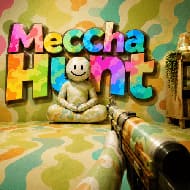
Meccha Hunt
-
Fruit Ninja
-
Toaster Dash
-
Meccha Chameleon 3
-
Meccha Chameleon 2
-

Water Color Sort
-
Stickman Chameleon
-
Paint to Hide!
-
Paint&Seek Online
-
Meccha Obby
-
Paint or Seek: Chameleon Hide Online
-
Hide ‘N Seek!
-
Paint Strike
-
Meccha Chameleon Mobile
-
A Little to the Left
-
Among Us
-

Stickman Hook
Meccha Hunt
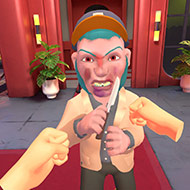




You freeze mid-crouch as a Hunter’s flashlight sweeps across the room, and for one full second you’re convinced the paint job on your legs doesn’t quite match the crate you copied. That flicker of doubt is the entire pitch of Meccha Hunt, a browser multiplayer game built around disguise, timing, and the constant fear that your camouflage isn’t as good as you think it is.
| Genre | Hide-and-Seek Multiplayer |
| Platforms | Browser, Desktop, Mobile |
| Lobby Size | Up to 24 players |
| Core Mechanic | Camouflage vs. active hunting |
| Featured Mode | Infected Mode |
Every match splits the lobby into two roles: Mecchas, who paint and reshape themselves to blend into the surroundings, and Hunters, who have until the round timer runs out to spot and shoot every disguised player. Mecchas get a color picker and an eyedropper tool to sample the exact shade of a nearby object, plus the option to shrink down or twist into blobby poses that make them look like ordinary clutter rather than a person hiding in plain sight.
Beginners almost always overcommit to one trick. They’ll nail the color with the eyedropper and then forget that shape matters just as much, so a Hunter walks past three times before noticing a “box” with slightly rounded corners. Veterans of the game treat color and silhouette as equally important, and they’ll hold a pose for the full round rather than shifting nervously when footsteps get close, since motion is what actually gives most Mecchas away.
Camouflage Tools and the Painting System in Meccha Hunt
The painting layer is what separates this game from a standard prop hunt. Instead of picking a pre-made object skin, Mecchas manually color their own body shape, which means two players hiding as the same crate can look completely different depending on how carefully they sampled the surrounding texture. Casual players tend to rush this step, while completionist types will restart their disguise mid-round if a Hunter’s flashlight reveals a mismatched patch.
Cloning is the other tool worth understanding early. A Mecchas can spawn a decoy clone that copies their current disguise, and Hunters have to physically check both to know which one is real. This works best in clusters of similar-looking objects, since a lone decoy in an empty hallway just draws attention instead of deflecting it.
Where the mechanic gets divisive is pose-switching under pressure. Some players find the manual pose menu clunky when a Hunter is already in the room, and forum threads about Meccha Hunt regularly bring up the same complaint: fumbling the disguise controls at the worst possible moment. It’s a fair criticism, and it’s part of why experienced players set up their disguise early instead of waiting until footsteps are audible.
Hunter Strategy and Map Awareness
Playing as a Hunter rewards a completely different skill set. Instead of hiding, you’re scanning fifteen-plus maps ranging from cramped indoor rooms to larger themed areas, looking for the small inconsistencies that give a disguise away — a shadow falling the wrong direction, an object sitting slightly off from where it should be, a color that’s a shade too saturated.
Once Infected Mode is active, the pressure compounds. Every Meccha a Hunter catches immediately switches sides and starts hunting too, so a lobby that opens with one or two Hunters can flip into a majority-Hunter chase by the halfway mark. Surviving late into an Infected round is one of the clearest signs of a strong Meccha player, since the number of safe hiding spots shrinks every time someone gets caught.
Infected Mode and Shrinking Lobbies
Infected Mode is where most of the community’s best clips come from. The tension isn’t just about staying hidden anymore — it’s about tracking how many players have already flipped to the Hunter team and adjusting your hiding spot accordingly, since a corner that was safe against two Hunters can become a death trap against eight.
- Match both color and shape, not just one or the other
- Use the eyedropper on nearby surfaces rather than guessing a shade
- Save cloning for areas with several similar objects
- Hold your pose once a Hunter enters the room instead of adjusting
What makes Meccha Hunt different from Meccha Chameleon?
Meccha Hunt focuses on fast browser-based multiplayer matches rather than a downloaded client, and it adds larger lobbies alongside Infected Mode, where caught players join the hunting side instead of sitting out for the rest of the round.
How many players can join a single Meccha Hunt match?
Servers support up to 24 active players at once, which is large enough that a full lobby playing Infected Mode can turn into total chaos by the final minute of the timer.
Is there a way to play only with friends?
Yes, the game allows private lobbies, so a group can run their own matches on a chosen map without random players joining the queue.
What keeps people coming back to Meccha Hunt isn’t really the win condition, it’s the small moment of held breath while a Hunter stands three feet from your disguise deciding whether that crate looks a little too perfect. Between the eyedropper tool, the cloning trick, and the creeping panic of Infected Mode, it’s a game that rewards patience far more than it rewards panic.
Comments
There are no reviews yet. Be the first one to write one.