


-
Hide and Luig
-

Meccha Hunt
-

Fruit Ninja
-

Toaster Dash
-
Meccha Chameleon 3
-
Meccha Chameleon 2
-

Water Color Sort
-
Stickman Chameleon
-
Paint to Hide!
-
Paint&Seek Online
-

Meccha Obby
-

Paint or Seek: Chameleon Hide Online
-
Hide ‘N Seek!
-

Paint Strike
-

Meccha Chameleon Mobile
-

A Little to the Left
-
Among Us
-

Stickman Hook
Tomb Of The Mask










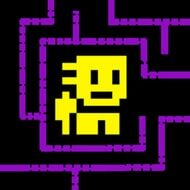
What happens when your reflexes run out of time? Tomb of the Mask answers that question every six seconds. The game places a masked explorer named Tomb — or more accurately the mask itself that transforms whoever wears it — in a vertical neon labyrinth that scrolls relentlessly upward. Swipe in any direction, and your character shoots across the screen until hitting a wall. The question is never “can I move?” but “where will I stop?” and “what’s waiting there when I do?”
The Swipe Mechanic and Why It’s Harder Than It Looks
Tomb of the Mask uses a swipe-to-move system where each directional input sends the player character moving at full speed until a wall stops the momentum. There is no half-step or diagonal movement — you commit to a direction and the game takes you all the way. In early stages, this means planning two or three moves ahead. In later stages, the vertical scroll speed has increased enough that planning six or seven moves ahead is the minimum required to survive.
The walls themselves are not the primary threat. Enemies, spike traps, and falling damage are. Bats swoop in predictable arcs, snakes patrol fixed corridors, and electric fences cut off entire sections of the maze. Each enemy has a movement pattern that players learn to read — bats can be kited around corners, snakes can be jumped over by timing the approach — but the scrolling screen means you cannot afford to study any one enemy for long. The decision has to be made before you’re fully sure.
The mask power-up that defines the game’s identity grants wall-crawling ability. Without it, the character cannot climb walls and must navigate purely by bouncing between surfaces. With it, you can slide up vertical walls, opening routing options that turn corridors from death traps into escape routes. The mask does not last — the game keeps its duration short enough that losing it mid-maze feels like losing a safety net.
Coins, Dots, and the Score Loop
Tomb of the Mask is built around a collection loop that operates on two timescales. The small yellow dots scattered across every maze generate score multipliers when collected in chains. Missing dots resets the multiplier. This creates a tension between taking the safer path (which often skips dot clusters) and taking the aggressive one (which passes through enemy territory to chain the multiplier). High-score players consistently choose the aggressive route.
Coins are the permanent currency. They unlock new character skins, some of which are cosmetic variants of the original masked explorer and others which are distinctly different visual styles — everything from pixel-art aliens to retro character designs. None of the cosmetic choices affect the hitbox or movement speed; the game is purely skill-based in its progression. Players who spend extended time in Tomb of the Mask develop a preference for specific character sizes because certain designs feel easier to mentally track in dense mazes, even though statistically nothing changes.
The community debate around coins-per-hour as an efficiency metric became one of the more unusual Tomb of the Mask discussions in mobile gaming circles. Players compare routes and argue about which maze layouts generate the most coins in a single session. This kind of optimization thinking shows up in a casual arcade game that most new players treat purely as a reflex test.
Enemies and How Players Handle Them
Bats in Tomb of the Mask patrol in horizontal swoops. They can be reliably avoided by swipe-moving perpendicular to their path — if a bat moves left to right, a vertical swipe up or down clears it. The problem is that bats rarely appear alone, and navigating around one bat positions you for the next corridor of spikes. The bat forces a routing choice, not just a dodge.
Snakes are stationary obstacles that occupy corridor floor tiles. They can be passed over by timing the approach so you arrive at the end of the snake’s occupied tile with a clear path. In slower maze sections this is manageable; at higher scroll speeds, reading the snake’s position in advance becomes the primary challenge. Some community players report memorizing specific snake patterns in the procedurally-generated mazes, which suggests Tomb of the Mask’s generation algorithm has fewer unique snake layouts than the randomness implies.
Power-ups include the shield, which absorbs one hit from any source, and the magnet, which pulls nearby dots into the player’s path. The shield is considered the more valuable of the two in high-score runs because it enables aggression — you can pass through a bat swoop or brush a spike if the shield is active. The magnet helps multiplier chains but does not improve survival. Players running score strategies typically spend coins to upgrade shields first.
What Tomb of the Mask Players Actually Discuss
The Tomb of the Mask community’s most consistent point of friction is the maze exit timing. Occasionally a player exits a maze segment at high speed only to find the next segment’s opening is positioned unfavorably relative to their momentum. They land directly on a spike or into an enemy they had no way to see in advance. This is the game’s most criticized design element — a small but real percentage of deaths feel generated rather than earned, particularly in the later maze stages where scroll speed leaves no reaction window for procedural surprises.
Despite this, the replay rate is unusually high. The combination of the retro neon aesthetic and the swipe-move system creates a rhythm of play that becomes genuinely meditative once the mechanics are internalized. Players often describe running Tomb of the Mask as a way to switch off conscious thought while still performing a skilled activity — which puts it in a specific category of arcade games that feel mindless to watch but demanding to play.
- How many levels does Tomb of the Mask have? The maze structure is procedurally generated, meaning there is no fixed level count. Players progress through themed maze sets — each with its own visual palette and enemy roster — rather than numbered stages. The game tracks score and progress within each themed set. Experienced players consider the first 30 or so themed sections “standard” difficulty before the scroll speed enters territory that separates casual players from dedicated ones.
- Is the wall-crawling mask permanent? No. The wall-crawling mask has a duration timer. It can be extended by collecting additional mask icons found in the maze during an active run. Some maze layouts are designed around mask availability, placing mask icons just far enough into the maze that players who move efficiently can chain mask durations across an entire section, while players who take detours lose the ability mid-route.
- Does Tomb of the Mask get easier after practice? Yes, significantly. The first hour of play is primarily confusion about which direction to swipe in tight corridors. After internalizing the swipe-to-wall physics, the game becomes about routing and enemy timing rather than basic movement. Players who push past the initial frustration consistently report that the game feels almost entirely different after the mechanics click — a common point raised in community discussions about newcomer retention.
Tomb of the Mask earns its place in the casual reflex genre by refusing to hold still long enough for you to feel comfortable. The scroll never stops, the bats never stop, and the maze never repeats in a way that lets you coast on memory. The routing puzzle that plays out in the half-second between swipes — dodge the snake, grab the dot cluster, find the wall that stops you near the next safe corridor — is exactly what makes Tomb of the Mask something players return to long after most arcade games have been forgotten.
Comments
There are no reviews yet. Be the first one to write one.