


-

Hide and Luig
-

Meccha Hunt
-

Fruit Ninja
-

Toaster Dash
-

Meccha Chameleon 3
-

Meccha Chameleon 2
-

Water Color Sort
-

Stickman Chameleon
-

Paint to Hide!
-

Paint&Seek Online
-

Meccha Obby
-

Paint or Seek: Chameleon Hide Online
-

Hide ‘N Seek!
-

Paint Strike
-

Meccha Chameleon Mobile
-

A Little to the Left
-

Among Us
-

Stickman Hook
Level Devil





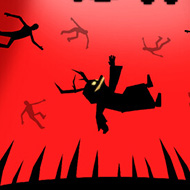







You step onto what appears to be a solid floor in Level Devil and it is solid — for exactly two steps. Then it disappears. You fall, respawn at the last checkpoint, step forward again, and the floor is there again. You step farther and a spike emerges from the ceiling with no warning. You respawn, step forward, get past the spike, and then the floor ahead tilts at an angle you did not see coming. Level Devil is a game about the floor lying to you, and then teaching you what the truth is, one death at a time.
The Troll Platformer Structure and Why It Works
Level Devil is a troll platformer — a game in which the primary challenge is not executing a difficult move but anticipating an unexpected one. The environment changes in response to player progress: floors collapse, walls slide, spikes extend, platforms flip, and gravity occasionally reverses. None of these changes are announced. Each one is discovered by triggering it and dying.
The structure that makes this work rather than feeling arbitrary is memorization. Each troll event in Level Devil triggers at a consistent location and in a consistent way on every replay. Step on tile 12 of the floor and it disappears — always tile 12, always disappears. Walk through the door in Room 3 and a spike drops from the third ceiling tile — always Room 3, always the third tile. This consistency means that every death is informative. The player is not experiencing randomness; they are receiving information about what will happen at a specific point. The game is teaching through killing.
The checkpoint system in Level Devil spaces respawn points close enough that individual troll events can be learned in isolation. Dying five times at the same floor-collapse teaches the collapse without requiring the player to also remember all prior events on that run. The checkpoint design is arguably the most important structural decision in Level Devil — without it, the accumulation of troll discoveries would be too long to replay efficiently and the teaching loop would break.
Troll Event Types and How Players Read Them
Level Devil’s troll event catalog includes several distinct types. Vanishing floors disappear after the player steps on a specific tile and reform after the player respawns. These are the most common event type and the most memorable visually because the floor tile changes shade just before disappearing — a warning that is too brief to act on the first time but recognizable on subsequent attempts. Players who know to look for the shade change get a fraction of a second of advance warning that allows them to abort the step.
Moving spike columns emerge from walls, floors, and ceilings at fixed timing intervals. The interval is consistent — the spike column emerges every 3 seconds in some locations, every 5 in others — and the timing can be synchronized with player movement once known. Players who take two attempts per spike column (one to learn the timing, one to synchronize) move through spike column rooms significantly faster than players who try to react in real time.
Gravity reversals are the most disorienting Level Devil event. When gravity reverses, the player character falls toward the ceiling rather than the floor. Ceiling becomes floor, floor becomes ceiling, and any spikes positioned on the floor become overhead threats. Gravity reversals typically affect a defined room rather than the entire level and reset when the player exits the room through the appropriate door. First encounters with gravity reversal rooms are almost universally lethal — the reversal is triggered without warning and the ceiling the player falls toward typically has hazards that were not registered as threats during normal-gravity examination of the room.
Fake platforms — tiles that look solid but are not — appear in Level Devil’s later sections. Unlike vanishing floors, which disappear after contact, fake platforms fail immediately on contact, with no delay warning. The only visual distinction is a subtle shading or texture difference that becomes recognizable only after multiple encounters. The fake platform reveal is considered the most cruel troll event type by the community because it is the hardest to read ahead of discovery.
The Devil Character and Level Theming
The player character in Level Devil is a small red devil figure with a cape that flows during movement. The devil character bounces slightly during idle animation and reacts with exaggerated alarm to approaching hazards in the fractions of a second before contact — the alarm animation is too brief to actually provide reaction time, but it is a consistent visual cue that a hazard exists at the current location that the player will learn to recognize on repeat passes.
Level Devil’s visual environment is divided into thematic sections: the Starter Dungeon, the Spike Factory, the Reverse Realm, and the Final Floor. Each section has a distinct palette and set of troll event types. The Starter Dungeon uses predominantly vanishing floors and simple spike timing. The Spike Factory introduces moving spike formations and tighter timing windows. The Reverse Realm focuses on gravity manipulation. The Final Floor combines all event types from prior sections in compressed sequences where multiple trolls occur in rapid succession.
The boss encounter at the end of each major section is a room-sized troll event that requires remembering a longer sequence of environmental changes than standard rooms. Boss rooms do not have intermediate checkpoints — the entire boss sequence must be completed in one pass from the room’s entrance. Players who approach boss rooms without having internalized the prior section’s event timing find them extremely difficult; players who have memorized the event patterns from individual rooms find boss encounters more manageable because the boss sequences reuse the same troll types in combination.
The Learning Loop and Death Count as Progress
Level Devil does not display a death counter prominently during play, though the total death count is tracked and displayed at the end of each session. Players who track their own death count per section report that the average first-pass death count through the Starter Dungeon is 8–12 deaths; the Spike Factory averages 18–25 deaths; the Reverse Realm averages 30–40 deaths; the Final Floor averages 25–35 deaths. The U-shaped difficulty curve — Reverse Realm harder than Final Floor — reflects the fact that the Reverse Realm introduces the most conceptually disorienting mechanic, while the Final Floor’s combinations are harder to execute but do not introduce new concept surprises.
The community’s consensus on Level Devil’s design quality centers on the consistency of its troll events. Players who have played many games in the troll platformer genre note that Level Devil’s events are more reliably consistent than most competitors — the same tile always vanishes, the same spike always emerges at the same timing, and the gravity reversal always triggers at the same door threshold. This consistency is what allows Level Devil to be genuinely learnable rather than requiring psychic prediction. The game is difficult because events are surprising on first encounter, not because they are random.
Speedrunning and Route Optimization
Level Devil has an active speedrunning community that has mapped every troll event timing and developed optimal routes through each section. The Starter Dungeon world record route involves memorizing the 11 distinct vanishing floor timings across its 14 rooms and moving immediately through each one without hesitation — the brief shade-change warning is sufficient for players who know exactly what they are looking for, allowing movement to continue with essentially no slow-down for any vanishing floor in the section.
The Spike Factory speedrun route uses a technique the community calls “spike surfing” — moving through spike column rooms at the specific speed where the column’s timing and the player’s movement pace synchronize naturally, allowing the player to move forward between spike extensions without counting or pausing. Spike surfing requires having internalized the extension timing deeply enough that the rhythm feels physical rather than counted, similar to the tap rhythm technique used in other fast-paced games that involve obstacle timing.
How many levels does Level Devil have?
Level Devil contains four main sections — Starter Dungeon, Spike Factory, Reverse Realm, and Final Floor — each consisting of multiple rooms. The total room count across all four sections is 60 rooms. A post-completion challenge mode unlocks 15 additional rooms that revisit earlier troll event types with compressed timing and fewer checkpoints, extending the total content to 75 rooms for completionists who want to test mastery beyond the main campaign.
Are the troll events truly random or always the same?
Always the same. Every vanishing floor, spike column, gravity reversal, and fake platform triggers at the exact same location and timing on every replay. This consistency is the design principle that separates Level Devil from games that use randomized surprise, and it is what makes the death count a legitimate progress indicator rather than a frustration measure. Each death provides information; that information is never invalidated by randomization on the next attempt.
Is there a way to see troll events coming?
For some events, yes. Vanishing floors have a color-shift warning that is too brief for a first-time reaction but readable on repeat passes. Spike columns have a sound cue that begins one second before extension. Fake platforms have a subtle texture difference that becomes recognizable after multiple exposures. Gravity reversals have no visual warning — they trigger on door-cross events and are the only event type in Level Devil that cannot be read in advance, only memorized by location. The sound cue for spike columns is the most actionable warning in the game and the reason experienced players recommend enabling sound while playing Level Devil.
Level Devil earns every death it gives you by making that death informative. The floor will lie to you again in the exact same place and the exact same way, and the second time you will step shorter, or you will jump over, or you will time the pass through the gap precisely. The game is a cumulative negotiation with a level that has decided to kill you in every way it can think of — and it can think of enough ways that reaching the end feels like an honest victory earned through everything the floor tried and failed to do to you.
Comments
There are no reviews yet. Be the first one to write one.