
















FEED THE FISH






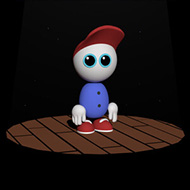






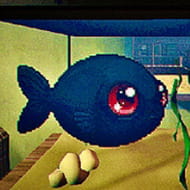
The man at the strange shop gave you one rule: do not feed the fish. FEED THE FISH opens in a trailer at the edge of nowhere, a small black fish swimming peacefully in its tank, fog thickening outside, the sky bleeding into red. You ignore the rule immediately, because the fish looks hungry and you are, apparently, the kind of person who feeds hungry things. That decision is the entire premise of a 10-to-15 minute PSX-aesthetic psychological horror game that escalates from quiet domestic routine into something considerably harder to describe by the time the ending lands.
| Genre | First-person psychological horror |
| Platform | Windows |
| Playtime | 10–15 minutes |
| Visual style | Retro PSX / VHS / CRT aesthetics |
The Trailer, the Tank, and the Fog
FEED THE FISH keeps its gameplay simple by design. You move through the trailer with WASD, interact with the fish tank and the surrounding environment using E or left-click, and zoom in with right-click. There is nothing complicated to learn. The game knows exactly what it is doing with that simplicity — establishing a calm, familiar loop of a domestic task so that when the environment starts shifting around you, the contrast does the horror work. The fish tank is your anchor, and the game keeps pulling you back to it while everything outside the windows becomes something you do not want to look at directly.
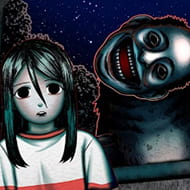
The PSX low-poly visuals and CRT screen layering are not just aesthetic choices. They do something specific to the horror: distorted faces and unsettling figures in the environment read differently through that filter than they would in a clean modern renderer. Players who have spent time with retro-style horror games will recognize the technique — the visual noise gives your brain permission to rationalize what it just saw as an artifact, right up until the moment it happens again and is clearly not. Players who notice the neighbors commenting that those neighbors were deeply wrong from the start of the game are reacting to exactly this.
One detail the community picks up on immediately: FEED THE FISH writes a text file to your computer during gameplay as part of the experience. This is documented in the game description, not a hidden behavior, but the first time you find the file after finishing the game it produces a specific feeling that walkthroughs cannot replicate. It is a small touch that extends the horror a few inches past the screen, and it is the kind of thing players mention in the same breath as the ending.
Cosmic Escalation and the Ending Debate
The structure of FEED THE FISH moves through what players describe as analog horror into something closer to cosmic horror by the final minutes. The fish evolves visually as you feed it — this is something players notice and flag as genuinely unsettling rather than scripted-feeling — and the game’s closing sequence involves a note left behind whose specific contents send players back to the comments section to compare readings.
The ending is the most discussed element of the game. A meaningful portion of players finish FEED THE FISH having understood the atmosphere completely and the story only partially. Comments are full of people who enjoyed the experience while admitting they could not explain what actually happened. One honest community criticism is that the final sequence feels abrupt — the escalation builds well across the short runtime but the resolution arrives and closes before players feel the narrative has fully surfaced. The audio also spikes at certain points in ways that surprised players who were not expecting it, which some flagged as an optimization note for a future update.
What the Game Gets Right
At 10 to 15 minutes, FEED THE FISH commits to a single mood and sustains it. The trailer environment is built with enough environmental detail that exploring it carefully rewards attention without over-explaining anything. The jumpscare tied to the fish tank feeding interaction is the one that players consistently call out as landing well — it is timed correctly, which is rarer than it should be in short horror games built at speed. The VHS overlay and ambient sound design carry significant weight here, creating the sense that something is wrong in the space before anything demonstrably is.
Players who enjoy analog horror aesthetics and short, concentrated dread experiences find FEED THE FISH a strong fit. Players who want a clear story payoff will likely finish it unsatisfied. That split is consistent across the comments and is probably the most useful thing to know going in — the game is better at atmosphere than resolution, which means whether that tradeoff works for you is the real question.
Frequently Asked Questions About FEED THE FISH
What does the text file that FEED THE FISH creates actually do?
The game writes a .txt file to your computer during play as a deliberate part of the horror experience, not a bug or unintended behavior. What the file contains is part of what players discover after finishing — finding and reading it after the game ends is intended. The developer documents this on the game page so players know to look for it, and it extends the ending in a way the in-game sequence alone does not.
Is FEED THE FISH coming to Steam?
No. The developer has confirmed directly in the comments that a Steam release is not planned. FEED THE FISH is available on Windows via itch.io at a pay-what-you-want price, and the developer has indicated no plans for a larger commercial version in the near future.
Why does the fish evolve in FEED THE FISH?
The fish changes visibly as you feed it across the game’s runtime, and the evolution is tied directly to the central premise — feeding the thing you were told not to feed has consequences that build over the course of the experience. The man at the shop’s rule exists for a reason the game gradually makes clear, and the fish’s final state by the closing sequence is what the note references. Beyond that, the specific meaning is left for players to work out, which is why the ending discussion in the comments is as active as it is.
FEED THE FISH earns its 4.4 rating on atmosphere alone. The trailer, the fog, the red sky, the small black fish evolving in its tank while something watches from outside — these build a coherent dread across a very short runtime, and the text file sitting on your computer when you close the game is a finishing touch that players who have found it tend not to forget. Whether you fully understand what happened by the time it ends is almost beside the point.
Comments
There are no reviews yet. Be the first one to write one.