


-

Hide and Luig
-

Meccha Hunt
-

Fruit Ninja
-

Toaster Dash
-
Meccha Chameleon 3
-

Meccha Chameleon 2
-

Water Color Sort
-
Stickman Chameleon
-

Paint to Hide!
-
Paint&Seek Online
-
Meccha Obby
-

Paint or Seek: Chameleon Hide Online
-

Hide ‘N Seek!
-

Paint Strike
-
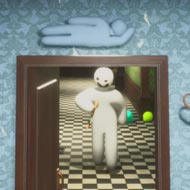
Meccha Chameleon Mobile
-

A Little to the Left
-
Among Us
-

Stickman Hook
Endacopia






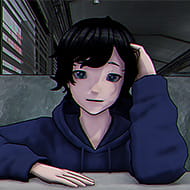





What happens when a point-and-click adventure stops following the rules point-and-click adventures usually follow? That’s the question Endacopia keeps asking, over and over, from the moment you’re handed control of a lost child named Mellow and told, essentially, to figure it out.
Who Is Mellow, and Why Are You His Guardian Angel?
Mellow is the game’s protagonist, a child who doesn’t understand much about the strange world he’s woken up in beyond one thing: he trusts his gut instinct. You don’t play as Mellow directly so much as guide him — the framing casts you as a kind of guardian angel, steering him through rooms, puzzles, and encounters he wouldn’t survive alone.
This setup does a lot of narrative work without needing much exposition. Because Mellow himself is naive about the world, the player is naturally positioned to piece together what’s actually going on, which is part of why horror-adventure fans tend to describe Endacopia as unusually good at environmental storytelling.
Comedy fans, meanwhile, latch onto something different — the game’s willingness to undercut its own dread with genuinely absurd humor, sometimes in the same room where something disturbing just happened.
The Office Realm’s Credit System
One of Endacopia’s most talked-about areas runs on an internal economy players have started calling the “credit system,” where nearly everything — opening doors, buying trinkets, even gambling at oversized roulette wheels — costs a form of in-world currency tied to this office-themed zone. It’s a clever way to reframe ordinary adventure-game inventory logic as something thematically loaded, since the area itself is built around a satirical take on corporate life.
Early visitors to this section often assume the credit system works like traditional adventure-game currency, something you simply accumulate and spend without much strategy. That assumption gets tested quickly, since some of the more useful purchases compete directly with each other for a limited pool of credits.
There’s also a dice-based minigame tied to this area that has caused enough technical hiccups that the developer has publicly asked players to report crashes immediately — a small but telling sign of how experimental some of Endacopia’s systems still are.
Misery Town and Its Toy Train Detour
Misery Town is the second major named area, and it swaps the office realm’s corporate satire for something bleaker and more atmospheric. Once you reach Misery Town, the tone shifts noticeably — the humor doesn’t disappear, but it gets sparser, and the environmental details start doing more of the emotional heavy lifting.
The area’s signature minigame puts you in control of a toy train hopping over obstacles, and it’s a good example of how Endacopia treats minigames less as filler and more as tonal punctuation for whichever zone you’re currently in. Reaching Misery Town also tends to be the point where players stop expecting a conventional adventure-game structure and start treating each new room as its own small mystery.
Genesis 01 is one of the recurring figures encountered around this stretch of the game, and interacting with certain items near this character — including a green mug that shows up in more than one puzzle — has been the subject of bug reports the developer has since patched.
Puzzles, Inventory Logic, and Where Players Get Stuck
- Inventory puzzles form the backbone of most rooms, but each area reinterprets what “using an item correctly” even means, so solutions that worked in the office realm won’t necessarily transfer to Misery Town.
- A recurring character named Scribbly is tied to a pencil-based puzzle that multiple players have flagged in bug reports, since leaving the room mid-interaction could previously cause visual glitches.
- The waterfall area contains a code-based door that trips up players who haven’t been paying attention to environmental clues scattered in earlier rooms.
- Boss encounters appear periodically and lean into first-person perspective shifts, which catches players off guard the first time it happens since nothing earlier in the game telegraphs it.
What ties these puzzle types together is that Endacopia rarely explains its own logic outright. You’re expected to notice patterns — a sign that talks, a clock with a face, a door that only responds to certain items — and connect them yourself, which is exactly the kind of design adventure-game veterans tend to praise.
The Music, the Mood, and What Makes Endacopia Divisive
Composer Packtion handles the game’s soundtrack, and the score shifts registers as dramatically as the environments do, moving from playful chiptune-adjacent cues in lighter rooms to something much more unsettling once you’re deeper into the horror elements. It’s one of the more consistently praised aspects of the whole production.
Not every reaction is uniformly positive, though, and it’s worth being upfront about that. Some players find the constant tonal whiplash between horror and comedy genuinely disorienting rather than delightful, and reviewers have noted that pinning down exactly what kind of game this is supposed to be is part of the challenge — for some, that’s the appeal; for others, it undercuts the scares.
The game also carries a content warning for body horror, disturbing imagery, and other unsettling themes, which is worth knowing going in if you’re sensitive to that kind of material.
What Endacopia Is Known for in Its Community
Among adventure-game communities, Endacopia has built a reputation less for any single standout puzzle and more for its sheer commitment to tonal unpredictability — reviewers frequently describe it as a game that “marches to the beat of its own drum,” and player discussion tends to circle around specific rooms rather than the plot as a whole.
The game released on July 27, 2026, after a Kickstarter campaign, and reception has been overwhelmingly positive, with roughly 98% of a few thousand reviews landing favorably. A full playthrough typically runs somewhere around six hours, though exploration-focused players tend to run longer given how many optional rooms and minigames are tucked into each area.
Horror fans and comedy fans end up forming two slightly different fan bases around the same game, which is unusual, and both groups tend to point to different rooms as their favorite.
- How many named areas does Endacopia have? The game is built around a handful of distinct zones, with the office realm and Misery Town being the two most discussed in community guides, each with its own minigame and puzzle logic.
- Who is Mellow’s guardian angel in Endacopia? The guardian angel role is filled by the player directly — there’s no separate in-world character for it, which is part of why the framing feels so personal as you guide Mellow through danger.
- What is the dice minigame in Endacopia? It’s a gambling-style minigame tied to the office realm’s credit system, and it’s also one of the more technically fragile sequences in the game, with the developer actively tracking crash reports tied to it.
Endacopia doesn’t resolve its own contradictions so much as lean into them, and that’s exactly why Mellow’s slow walk through the office realm and Misery Town has stuck with so many players long after the credits roll.
Comments
There are no reviews yet. Be the first one to write one.