


-
Hide and Luig
-
Meccha Hunt
-
Fruit Ninja
-
Toaster Dash
-
Meccha Chameleon 3
-

Meccha Chameleon 2
-

Water Color Sort
-
Stickman Chameleon
-
Paint to Hide!
-
Paint&Seek Online
-
Meccha Obby
-

Paint or Seek: Chameleon Hide Online
-
Hide ‘N Seek!
-
Paint Strike
-
Meccha Chameleon Mobile
-
A Little to the Left
-
Among Us
-
Stickman Hook
Running Fred
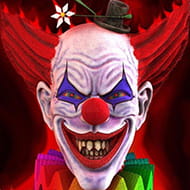




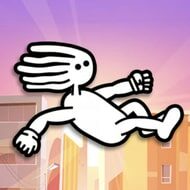

The death counter in Running Fred did not display prominently in early versions — which is a design decision the community has strong opinions about, because the death counter is the entire emotional center of the game. Fred, a cartoon skeleton who can be substituted for various unlockable characters, runs away from the Grim Reaper through a gauntlet of blades, spikes, pits, and swinging axes. Every death is gruesome, cartoonishly so, and the game catalogs each one. Players who stop to count their deaths mid-run discover that the number is both higher and more specific than they expected.
The Three Movement Options
Running Fred gives players three core actions: jump, slide, and strafe left or right. Jumps can be single or double — holding the jump input during a first jump extends it, and a second tap mid-air triggers a flip jump that covers more horizontal distance. Slides allow Fred to pass under low hazards. Strafing adjusts Fred’s horizontal position within the corridor, avoiding wall-mounted blades or moving laterally to land on a specific platform.
The combination of these three inputs — in a game where the Grim Reaper accelerates behind you — creates a timing system where the window for each correct input shrinks as speed increases. Early levels allow comfortable reaction times between hazards. In later stages, a jump-slide-strafe sequence needs to be executed within a second or less, with each input triggered in a precise order. Hesitation at any step means the next hazard arrives before Fred’s previous action has completed.
Double jumps are both Running Fred’s most powerful movement option and its most common error source. Players who use the double jump too early — triggering both jump inputs before reaching peak height on the first — lose the distance bonus that makes the double jump worth using. The correct timing for double jump activation is counterintuitive: the second jump input should come at the apex of the first jump’s arc, not immediately after the first jump registers. This timing mistake is the first skill plateau most Running Fred players hit.
Hazard Types and Patterns
Running Fred’s hazard catalog includes over a dozen distinct obstacle types, each with its own timing signature. Blade walls require a jump to clear. Spike floors require a jump or slide depending on spike height. Swinging pendulum axes oscillate on fixed cycles — the safe window is consistent across repetitions. Falling ceiling chunks drop in patterns that repeat within a run section. Rotating saw blades move on predictable paths that repeat after two or three oscillations.
Each hazard type has a community-standardized name among Running Fred players. “Pendo” refers to pendulum axes; “chomper” to closing jaw traps; “rain” to falling ceiling chunk sections. This vocabulary developed organically as players described runs to each other and needed shorthand for obstacle sequences. The names are used in speedrunning context to describe route segments and in casual discussion to reference specific death causes without explaining the full visual.
The Grim Reaper’s presence creates a passive hazard that interacts with all active ones. Stopping or slowing down to read an upcoming obstacle gives the Grim Reaper time to close the gap behind Fred, which adds time pressure to decisions that would otherwise be pure execution. Players who slow down to guarantee a precise jump may clear the obstacle safely only to be immediately caught by the Reaper they gave time to close in. The pursuit mechanic converts execution errors into punishment and hesitation into a different kind of punishment.
Stage Progression and World Structure
Running Fred is divided into world sections that each introduce new hazard combinations without completely replacing old ones. The game begins in a castle dungeon with blade walls and spike floors, then transitions to factory sections with saw blades and conveyor belts, then to cave environments with falling rocks and water traps. Each world has a distinct visual and audio identity, and the hazard palette shifts enough that players developing instincts for one world’s patterns must recalibrate for the next.
Skull collectibles scattered throughout levels serve two purposes. Collected in run, they contribute to an in-game currency for unlocking characters and skull upgrades. Skulls placed in hard-to-reach positions — over spike pits, near pendulum arcs — require deliberate routing decisions. Some players ignore skulls entirely and optimize pure speed; others target specific skull clusters despite the added death risk. The game does not force either choice, which creates two meaningfully different play styles within the same run structure.
Character unlocks include variants with slightly different visual sizes and hitbox shapes. Fred himself has a standard profile. The Grim Reaper as a playable character is larger with a different visual center of mass. Hitbox variation across characters is a genuine mechanical difference, and players who switch characters after learning hitbox timing on Fred sometimes need to adjust jump timing for obstacle clearance because their new character’s visual reference points have shifted.
What Running Fred’s Community Argues About
The death animation system in Running Fred is the game’s most divisive element. Deaths are exaggerated and slapstick — Fred bounces off blades, gets flattened by ceiling chunks, and reacts with cartoon physics to every hazard. The majority of players find this tone appropriate for the game’s cartoony visual language. A smaller group finds the frequency of deaths combined with the lengthy death animations disruptive to run continuity, arguing that shorter death-to-respawn times would improve the experience without losing the visual character.
The Grim Reaper’s speed scaling is the other major discussion point. In early stages the Reaper maintains a comfortable following distance that feels like atmosphere rather than pressure. In later stages the scaling becomes aggressive enough that players describe the Reaper as the primary obstacle rather than a background presence. The difficulty spike in Reaper speed between world transitions is steeper than the hazard complexity increase, which means some players who have technically mastered a world’s obstacle patterns still fail because the Reaper has caught up before they can execute.
How many worlds does Running Fred have?
Running Fred includes five main world environments in its standard version: the dungeon, the factory, the cave, the ice world, and the graveyard finale. Each world contains multiple stage sections with increasing hazard density. Completionists attempting to reach the final graveyard section without dying require mastery of obstacle patterns from all four preceding worlds — a challenge that roughly 8% of players who pick up the game ever accomplish based on community completion statistics.
What do skull upgrades actually do?
Skull upgrades in Running Fred modify specific run attributes. Collected skulls can be spent on a speed boost at run start (not recommended for beginners), an extended double jump arc, a brief shield that absorbs one hit from any hazard, and a score multiplier that increases skull value per collection. The shield upgrade is considered the most universally useful by the Running Fred community because it converts one guaranteed death into a survivable mistake — the most direct quality-of-life improvement available.
Running Fred earns its death counter because the deaths are the game’s honest accounting of how long mastering its hazard sequences takes. A first-hour player dies 200 times reaching the factory section. A veteran player dies 12 times reaching the same point. The gap between those numbers represents specific pattern knowledge — knowing the pendulum window, reading the chomper timing, landing a double jump at the right moment over a spike row — accumulated through exactly the kind of cartoonish, repeatable failure the game is designed around. Fred’s death count is the player’s practice log, rendered in cartoon blood and comedic physics.
Comments
There are no reviews yet. Be the first one to write one.