


-

Hide and Luig
-

Meccha Hunt
-

Fruit Ninja
-

Toaster Dash
-
Meccha Chameleon 3
-

Meccha Chameleon 2
-

Water Color Sort
-

Stickman Chameleon
-

Paint to Hide!
-

Paint&Seek Online
-
Meccha Obby
-

Paint or Seek: Chameleon Hide Online
-

Hide ‘N Seek!
-

Paint Strike
-

Meccha Chameleon Mobile
-

A Little to the Left
-

Among Us
-

Stickman Hook
Slope Tunnel









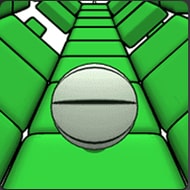
Slope Tunnel looks like a simple ball rolling down an incline, but it plays like a game actively trying to shake you off its own track — speed builds constantly, the tunnel narrows without warning, and by the second minute you’re steering on reflex because there’s no time left to think.
The setup is minimal by design: a ball rolls forward automatically through a downhill tunnel, and your only control is steering it left or right to avoid red obstacles and stay on the narrowing path. There’s no jump button, no combo system, no secondary mechanic waiting to unlock later — just momentum, obstacles, and your reaction time.
Why Slope Tunnel Gets Harder Without Changing the Rules
The obstacles in Slope Tunnel don’t get more complex as a run continues — there’s no new hazard type introduced halfway through. What changes is speed, and speed alone is enough to turn a manageable gap into a near-impossible one, since the same steering input that felt precise at the start becomes twitchy and overcorrected once the ball’s moving twice as fast.
Small steering adjustments beat sharp ones as speed increases. Players who last longest tend to describe backing off from large, decisive movements once the pace picks up, favoring small corrections that keep the ball centered rather than large swings that risk clipping the tunnel wall on the recovery.
Reading the Narrowing Before It Happens
The tunnel itself narrows in sections rather than uniformly, which means part of reading a run well is recognizing when a wide, easy stretch is about to funnel down — reacting to the narrowing itself rather than the obstacles inside it is often the difference between a clean pass and a late, panicked correction.
- Is there a way to slow the ball down in Slope Tunnel? No — speed only increases as a run continues, which is the core tension the whole game is built around rather than something you can manage away.
- What causes most runs to end early? Overcorrecting after a near-miss, more often than the obstacle that caused the near-miss in the first place — the recovery movement tends to be riskier than the original dodge.
There’s no ending to reach in Slope Tunnel, only a distance to beat, and that absence of a finish line is exactly why one more attempt always feels worth taking after a run that ended a few seconds sooner than the last one. The tunnel doesn’t slow down to let you catch up, and it never once pretends it will.
Comments
There are no reviews yet. Be the first one to write one.