


-

Hide and Luig
-

Meccha Hunt
-
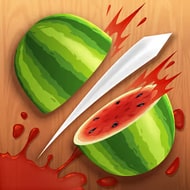
Fruit Ninja
-

Toaster Dash
-
Meccha Chameleon 3
-

Meccha Chameleon 2
-

Water Color Sort
-

Stickman Chameleon
-

Paint to Hide!
-

Paint&Seek Online
-
Meccha Obby
-

Paint or Seek: Chameleon Hide Online
-

Hide ‘N Seek!
-

Paint Strike
-

Meccha Chameleon Mobile
-

A Little to the Left
-

Among Us
-

Stickman Hook
Fruit Ninja










What separates a 300-combo from a 50-combo in Fruit Ninja? Not reaction speed — most experienced players can handle the fruit rain at maximum density. The difference is bomb management. A watermelon moving left to right in the upper half of the screen is easy to read and slice. A bomb mixed into a cluster of three pomegranates and a banana in the lower half of the screen, where your wrist was just positioned from the previous swipe, is the moment that ends runs. Fruit Ninja is not a slicing game. It is a bomb avoidance game that slices fruit as a side activity.
The Three Game Modes and What Each One Measures
Fruit Ninja offers three distinct modes that each test a different skill subset. Classic mode gives the player three lives — three fruits that can hit the bottom of the screen without being sliced before the game ends. No time limit, no bombs in most versions, and pressure is entirely self-generated by the player’s combo-maintenance habits. Classic rewards sustained attention and full-screen coverage.
Zen mode removes all threat entirely — no bombs, no lives, only a 90-second timer. The score is purely a product of how many fruits can be sliced in 90 seconds. Zen is the mode for practicing slice efficiency: wide strokes that collect multiple fruits in a single swipe, reading fruit trajectories before they reach peak height to optimize the slice angle, and maximizing the banana power-up windows when all fruit on screen is temporarily slowed. High Zen scores reflect technique optimization rather than risk management.
Arcade mode is 60 seconds with bombs, double-score bananas, freeze bananas that slow all fruit, and frenzy bananas that shower the screen in fruit for several seconds. Arcade mode demands the most complete skill set — bomb avoidance, power-up timing, efficient slicing during frenzy windows, and managing the compressed time pressure that Zen and Classic avoid. Arcade mode high scores are the primary competitive benchmark in the Fruit Ninja community because they require all skills simultaneously.
Slicing Mechanics and Stroke Efficiency
Fruit Ninja registers slices as continuous swipe paths. A single swipe that passes through multiple fruits scores all of them. A multi-fruit single-swipe is the game’s core efficient action — the player who builds five-fruit chains on single strokes scores at a rate that single-fruit swipers cannot match in Arcade mode’s time limit. Building multi-fruit strokes requires reading incoming fruit trajectories at peak height, where fruits are momentarily slowed before descending, and planning swipe angles that pass through multiple fruit positions simultaneously.
The critical blades — special slicing effects unlocked through play — vary in swipe appearance but not in hitbox. A Dragon Blade swipe and a standard swipe detect contact with fruit across the same spatial path. The visual difference between blades is purely cosmetic, which is important for players who wonder whether unlocking new blades affects scoring mechanics. The blades players choose tend to reflect visual preference and the clarity of the swipe trail against the background rather than any mechanical advantage.
Combo multipliers in Fruit Ninja require slicing multiple fruits within a short time window. A 4-fruit combo scores more than four individual slices; a 10-fruit combo during an Arcade frenzy banana window generates the highest per-second scores available in the game. The combo system penalizes slow, deliberate slicing and rewards fast multi-contact strokes. Players who approach Fruit Ninja as a precision game — targeting each fruit individually — find their scores consistently below players who approach it as a coverage game — keeping a broad swipe pattern active to catch clusters as they appear.
Fruit Types and Their Trajectories
Different fruit types in Fruit Ninja follow distinct trajectory patterns. Watermelons arc high and move slowly — they are the easiest single fruit to slice and the best target for a practiced combo setup stroke. Pineapples travel in tight arcs and tend to cluster near other pineapples, making them good multi-fruit stroke targets. Lemons and limes travel on flatter, faster trajectories and require quicker reaction to catch at peak height. Kiwi fruits appear in Fruit Ninja’s frenzy windows and small sizes make them harder to register on imprecise strokes.
Coconuts behave differently from all other fruit — they split into two halves on slicing, and each half continues on its own trajectory. Slicing a coconut mid-screen produces two new mobile targets that must be caught before they descend. The coconut split produces a brief window of high-density targets that an experienced player can convert into a large combo; an inexperienced player will find the two halves escaping before they can redirect their swipe.
Dragon fruit is a rare spawn type that appears as a purple, spiky fruit significantly larger than standard varieties. Slicing a dragon fruit releases a bonus score burst and temporarily causes all fruit on screen to glow — glowing fruit is worth doubled score. The dragon fruit window is Fruit Ninja’s highest single-item score event, and players who recognize the dragon fruit’s distinctive appearance instantly redirect to slice it first before anything else on screen.
Bomb Avoidance and the Split-Decision
Bombs in Fruit Ninja appear visually distinct — black, rounded, with a burning fuse — but in the fast pace of Arcade mode they can appear adjacent to fruit clusters with very little reaction margin. The bomb’s fuse burns during its arc, which means a bomb near the peak of its trajectory has more fuse remaining and is less urgent than one near the descent. This fuse timing is information experienced players use: a bomb with a long burning fuse can be noted and avoided for the rest of its arc without urgency, while a short fuse requires immediate attention because the bomb will detonate on the screen surface if not caught by the timer.
Slicing a bomb ends the run in Classic mode and deducts points in Arcade mode. The deduction in Arcade mode is large enough to be a significant setback rather than a minor penalty. Players who consistently bomb-slice in Arcade mode discover that the score impact is not from the deduction alone — it is from the disruption to the combo chain that was in progress. A bomb slice during a high combo window eliminates the combo’s accumulated multiplier and the remaining time in that window. The score cost of a bomb slice in a combo window is far higher than the raw point deduction.
The mental model that allows consistent bomb avoidance in Fruit Ninja is lateral peripheral awareness — tracking fruit and bomb positions across the full screen rather than focusing on the current swipe target. Players who focus tightly on the fruit they are slicing cannot see bombs approaching from outside their focus area. Players who maintain a wide visual field — processing the whole screen rather than tracking individual fruits — catch bomb positions before they become immediate threats and adjust swipe patterns to route around them rather than through them.
Sensei and the Star Dojo
Fruit Ninja’s Sensei is the robed mentor character who provides instruction and commentary in tutorial sections and achievement unlocks. The Sensei’s voice lines during achievement moments are one of the game’s most recognized audio signatures — the community regularly references specific Sensei lines as shorthand for achieving milestones or making errors. “Peachy keen!” after a clean high-score run and “Pomegranate seeded in despair” after a bomb-end are both embedded in Fruit Ninja player vocabulary in a way that non-players recognize as game-specific without knowing why.
The Star Dojo challenges provide daily and weekly structured slicing tests with specific conditions — achieve a certain combo size, clear a screen within a time limit, score above a threshold in Arcade mode. These challenges maintain engagement for players who have maximized their standard mode approach and need external goal structures to continue improving. The Dojo is where the competitive segment of the Fruit Ninja community focuses its attention, comparing star counts and discussing specific challenge strategies in detail.
- What is the highest possible combo in Fruit Ninja? The theoretical maximum combo in Fruit Ninja is capped by the frenzy banana spawn rate — the frenzy fills the screen with up to 20 simultaneous fruit in a burst. A single wide stroke through a full frenzy burst can register all 20 fruits, which combined with a double-score banana active at the same time generates the maximum theoretical single-stroke score. In practice, consistent 15+ fruit strokes during frenzy windows are considered exceptional performance, and the combo counts recorded in community high-score videos reflect this as the realistic ceiling rather than the theoretical one.
- Does blade choice affect gameplay in Fruit Ninja? No. All unlocked blades in Fruit Ninja have identical hitboxes and identical fruit contact detection. The blade choice affects only the visual trail of the swipe stroke. Some players prefer narrower trail visuals that do not obscure the screen during dense fruit clusters; others prefer wider, more visible trails as feedback for where the stroke path is. Neither preference provides a mechanical advantage — the choice is entirely about visual comfort during play.
- Is Classic or Arcade mode harder? They are difficult in different ways. Classic mode’s difficulty is monotonic — it only increases as the fruit density rises over time in a single run, and the only threat is missing fruit (no bombs in the base version). Arcade mode’s difficulty is multi-layered — bombs, power-up timing, time pressure, and frenzy management combine simultaneously. Most experienced players consider Arcade harder in terms of required skill depth, but Classic creates the more emotionally tense experience because a single missed fruit in a long run carries the accumulated risk of all prior survival decisions.
Fruit Ninja’s longevity comes from the gap between what its simple visual premise suggests and what its actual scoring ceiling demands. A new player sees fruit to slice. An experienced player sees a bomb-avoidance field with fruit scoring opportunities across it. The Sensei’s wisdom that “all fruit must fall, but no bomb should be sliced” describes a game where the fruit is the reward for managing threats rather than the primary object of attention. Watermelons arc, pineapples cluster, coconuts split, and somewhere in the middle of every Arcade frenzy window, a bomb with a short fuse is the only thing that matters.
Comments
There are no reviews yet. Be the first one to write one.