


-

Hide and Luig
-

Meccha Hunt
-

Fruit Ninja
-

Toaster Dash
-
Meccha Chameleon 3
-

Meccha Chameleon 2
-

Water Color Sort
-
Stickman Chameleon
-

Paint to Hide!
-

Paint&Seek Online
-

Meccha Obby
-

Paint or Seek: Chameleon Hide Online
-

Hide ‘N Seek!
-

Paint Strike
-

Meccha Chameleon Mobile
-

A Little to the Left
-

Among Us
-

Stickman Hook
Meccha Chameleon 2








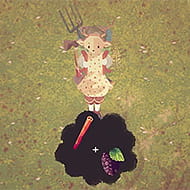



Meccha Chameleon 2 looks like the original Meccha Chameleon running faster with more colors and calls that a sequel — until you reach the Kaleidoscope zone and discover that the gates no longer require color matching. They require color prediction. What color will Meccha need to be in two seconds, given the sequence that has been established so far, and can you switch now to be ready rather than switching at the gate? Meccha Chameleon 2 takes the same chameleon, the same zones reshaped with new geometry, and asks a more demanding question of the player who knows the original cold.
What Meccha Chameleon 2 Changes from the Original
The foundational color-switch mechanic is identical in Meccha Chameleon 2 — tap or input to cycle colors, match gate to pass, miss breaks the ChromaChain. What changes is the gate variety. The original Meccha Chameleon uses static color gates — a gate displays its color and holds it until contact. Meccha Chameleon 2 introduces Shifting Gates, gates that cycle through two colors on a two-second loop, and Tempo Gates, gates that display their required color for only half a second before turning blank. Both new gate types require the player to respond to information that is not static, which is the core skill addition of the sequel.
Shifting Gates cycle between two colors in a predictable pattern. The cycle timing is consistent — both colors display for one second each. The challenge is determining which color the Shifting Gate will be displaying at the moment Meccha reaches it. At medium run speeds, the gate is visible far enough in advance to observe one full cycle and predict where in the cycle it will be at contact. At high run speeds, the gate enters the contact zone quickly enough that the player must predict from a partial cycle observation. This real-time cycle prediction is a new cognitive skill that the original game never required — the original’s static gates could always be read at contact; Shifting Gates cannot.
Tempo Gates are the sequel’s most controversial addition. They display the required color for half a second, then go blank. The player must remember the color and switch to it before reaching the gate. This converts a specific subset of Meccha Chameleon 2’s gate navigation from a visual reaction skill into a color memory skill. Players who play the sequel expecting the same real-time color reading as the original encounter Tempo Gates and find them initially baffling — seeing a blank gate, having forgotten or missed the brief display, and having no information to act on. Experienced players develop a habit of scanning the maximum gate distance ahead specifically to catch Tempo Gate display windows before they close.
New Zones and How They Use the New Gate Types
Meccha Chameleon 2 retains Chromawoods, Crystalfall Cavern, Neon District, and Sunburst Plains from the original, each redesigned with new geometry and gate placement. Two new zones — the Kaleidoscope and Twilight Rift — make their debut in the sequel as the primary showcases for Shifting and Tempo Gate mechanics.
The Kaleidoscope is Meccha Chameleon 2’s signature zone. The visual design is a rotating prism background where the backdrop itself shifts through color cycles independent of the gate sequence. Players who allow the background movement to influence their gate-color perception report a high miss rate in the Kaleidoscope specifically caused by confusing background colors with gate colors. The community recommendation for Kaleidoscope navigation is to focus exclusively on the central gate area and treat everything outside the gate frame as irrelevant visual information — easier to say than to do under the pressure of Shifting Gate prediction and the Kaleidoscope’s background speed.
Kaleidoscope gate sequences feature Shifting Gates almost exclusively, with Tempo Gates appearing in the zone’s latter half. The combination of Shifting Gate prediction and Tempo Gate memory in the same sequence is Meccha Chameleon 2’s highest cognitive demand. Players who report being “stuck” in the Kaleidoscope are almost universally struggling with one of three specific issues: missing Tempo Gate display windows because they are focused on Shifting Gate cycles, losing track of the Shifting Gate cycle phase when a Tempo Gate appears and demands attention, or allowing the background color movement to interfere with gate color reading.
Twilight Rift in Meccha Chameleon 2 differs from its mobile counterpart — rather than the Dusk Gates of the mobile version, the sequel’s Twilight Rift features Cascade Gates, which require the player to pass through a sequence of three gates in rapid succession where each gate’s required color is the complement of the previous gate’s color. Red follows Green; Blue follows Yellow; the alternating complement pattern must be recognized and executed within a window that allows no hesitation between gates. Cascade Gate sequences arrive after extended ChromaChain stretches specifically to test whether the player can maintain chain discipline under the pressure of rapid alternating switches.
ChromaChain 2.0 and the Burst System
ChromaChain in Meccha Chameleon 2 operates on the same consecutive-correct-match structure as the original but adds the Burst Meter, a secondary bar that fills during Chain Burst windows. Filling the Burst Meter during a single Chain Burst activates the Ultra Burst — a 10-second bonus window where score rates are doubled relative to standard Chain Burst rates and all Shifting Gate cycles are temporarily paused, making those gates static for the Ultra Burst duration.
The Ultra Burst’s gate-pause effect on Shifting Gates is the most impactful mechanical bonus in Meccha Chameleon 2. During Ultra Burst, the Shifting Gate prediction challenge is temporarily removed, which allows players to approach those gates with the simple direct color reading of the original game. This creates a strategic consideration: activating Ultra Burst in a Shifting Gate-heavy section of the Kaleidoscope clears the hardest gate type during the highest-score window. Players who time their Chain Burst entry to coincide with Kaleidoscope Shifting Gate clusters report the highest single-run scores in the community’s leaderboard discussions.
The Burst Meter does not fill if the Chain Burst is used during a low-density gate section. The fill rate depends on how many gates are cleared per second during the Chain Burst window — fewer gates per second means slower Burst Meter fill even if the Chain Burst is active. This creates a quality-versus-quantity dynamic: activating Chain Burst in a fast, dense gate section fills the Burst Meter quickly but demands the fastest color-switching performance during the highest-pressure moment. Players who prefer slower activation get less Burst Meter fill but operate in sections where mistakes are less likely.
Power-Ups Returning and New
Rainbow Burst, Chroma Dash, and Prism Shield return from the original Meccha Chameleon 2 with largely unchanged functions. Rainbow Burst remains the strongest single-item power-up, passing all gate colors for eight seconds. Chroma Dash retains its speed-increase with compressed reaction windows. Prism Shield continues to absorb one miss without breaking ChromaChain.
Meccha Chameleon 2 adds the Tempo Lens, a power-up exclusive to the sequel that reveals Tempo Gate display windows ahead of normal timing — with the Tempo Lens active, Tempo Gates display their required color for two seconds rather than half a second, giving ample reading time. The Tempo Lens is the most context-specific power-up in the sequel: nearly useless in Chromawoods or Crystalfall Cavern where Tempo Gates do not appear, and enormously valuable in the Kaleidoscope and Twilight Rift where they are frequent. Players who carry a Tempo Lens into the Kaleidoscope and activate it during a Cascade Gate sequence describe the result as the closest to “easy mode” the late game ever offers.
The Color Sync power-up is new to Meccha Chameleon 2 and specifically counters Shifting Gates rather than Tempo Gates. When Color Sync is active for four seconds, Meccha automatically matches Shifting Gates’ current displayed color at the moment of contact — the player does not need to predict the cycle. This sounds as powerful as Rainbow Burst in Shifting Gate contexts, but Color Sync does not match static gates during its active window — it only engages on Shifting Gates. Using Color Sync in sections where static and Shifting Gates alternate requires the player to manage color switching for the static gates while Color Sync handles the Shifting ones, which is a different skill expression than simply ignoring gate colors during Rainbow Burst.
Community Verdict on the Sequel’s Direction
The Meccha Chameleon 2 community is roughly divided between players who consider the Shifting Gate and Tempo Gate additions a natural and welcome evolution of the original’s skill demands, and players who feel the sequel’s memory and prediction requirements move away from the instant color-reaction feel that made the original compelling. Both groups exist in the same community discussions, and neither position is unreasonable.
Players who appreciate the sequel’s additions note that the original Meccha Chameleon’s skill ceiling is ultimately limited by human color-reaction speed — there is a point where the only way to increase difficulty is to require faster reactions, and that approach has diminishing returns once players reach peak reaction speeds. Shifting Gate prediction and Tempo Gate memory are skills that can always be pushed harder by increasing gate density and sequence complexity, giving the sequel a larger skill ceiling.
Players who prefer the original’s real-time reaction structure argue that converting some of the game’s challenge into prediction and memory changes the game’s identity rather than expanding it. A game about reacting immediately to color information in the present is a different experience than a game about anticipating color information from the future and remembering color information from the past. Meccha Chameleon 2 is the latter, which is both more cognitively demanding in some respects and less satisfying in others for players whose preference is the pure real-time response the original delivers.
Meccha Chameleon 2 earns its sequel status by genuinely expanding rather than simply copying what Meccha Chameleon established. The Shifting Gates and Tempo Gates are not harder versions of static gates — they are different gates that test different skills. The Kaleidoscope and Twilight Rift zones that showcase these new types are among the most visually and mechanically distinctive zone designs in either game. Whether the specific direction the sequel chooses suits any individual player depends on what they value most in the original — and both answers are reasonable starting points for what Meccha Chameleon 2 delivers.
Comments
There are no reviews yet. Be the first one to write one.