



-

Hide and Luig
-
Meccha Hunt
-
Fruit Ninja
-

Toaster Dash
-
Meccha Chameleon 3
-

Meccha Chameleon 2
-

Water Color Sort
-

Stickman Chameleon
-

Paint to Hide!
-

Paint&Seek Online
-

Meccha Obby
-

Paint or Seek: Chameleon Hide Online
-

Hide ‘N Seek!
-

Paint Strike
-

Meccha Chameleon Mobile
-

A Little to the Left
-

Among Us
-

Stickman Hook
Feed The Pit







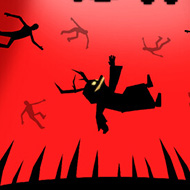
You flip your first card in Feed The Pit expecting a weapon prompt or a health bonus, and instead it asks whether your target has ever crossed running water. That question, on its own, sounds useless. Then you draw a second card, and a third, and the map of Carrister Valley starts shrinking around one lonely clearing. This is the moment Feed The Pit wants you to understand before anything else jumps out at you: you’re not here to fight, you’re here to think under pressure, and the forest is going to make that as uncomfortable as possible.
| Genre | First-person investigative horror, roguelite structure |
| Setting | Carrister Valley |
| Core loop | Draw cards to narrow a target’s location, evade that mission’s monster |
| Content available | Act 1, plus post-story Challenge Mode |
| Player count | Single-player |
Carrister Valley and the Society Willing to Feed It
The premise is blunt in a way that most horror games dance around. THE PIT hungers, the Chosen Circle serves it, and you’ve been recruited into that Brotherhood whether you asked for the job or not. Your targets are wealthy people hidden somewhere in Carrister Valley, and it’s your job to find them before the forest finds you. There’s no ambiguity about what happens to the bodies once you’ve located them, which is part of what makes the tone land so hard: this isn’t a story about surviving monsters so much as a story about becoming complicit in something monstrous.
What keeps that premise from feeling like set dressing is how much the game trusts you to piece the lore together yourself. Nobody explains the Chosen Circle’s full theology up front. You learn it in fragments, the same way you learn a target’s location — through inference, through cards, through conversations with cultists back at the hideout who clearly know more than they’re telling you. Reviewers have described entire missions spent doing nothing but running, because the tension of an active investigation and an active predator never lets up long enough for you to walk anywhere safely.
The game leans into that discomfort rather than softening it. One mission has become something of a community touchstone for how far the horror is willing to go, involving a stalking presence whose limbs distort as it closes in — the kind of detail players bring up unprompted when they’re recommending Feed The Pit to a friend, because describing it secondhand still gets a reaction.
Reading Cards Instead of Fighting Anything
Each investigation hands you a limited set of cards, and each card asks one specific question about where your target is hiding — a landmark, a weather condition, a trait of the terrain. Answer enough questions correctly and the valley’s map collapses from dozens of possible hiding spots down to exactly one. The catch is that you don’t get to pick your cards freely; you play the hand you’re dealt, which means half the challenge is figuring out which limited information is worth spending now versus saving for later.
Burn a strong elimination card too early and you’ll spend the back half of a mission flailing with weak, low-value questions while your nemesis for the day closes in. Hold everything back too cautiously and you’ll run out of turns before the map narrows at all. Players chasing the cEDH achievement — solving a target’s location using two cards or fewer outside the very first mission — treat this rationing as the real skill test of the whole game, well past what a casual clear requires.
None of this would matter if the questions felt random, but they don’t. A card that reveals whether a target lives near flowing water is doing a different job than one confirming a general region, and learning to read that difference — route removal versus final confirmation versus emergency recovery — is exactly the kind of thing the game’s own community has started cataloguing for newcomers.
Why Every Nemesis in Feed The Pit Plays Differently
Structurally each mission is the same: draw cards, narrow the map, move to the final location. What changes every time is the monster hunting you while you do it, and their behavior is never explained ahead of time. You learn a nemesis’s patrol logic, its blind spots, its triggers, through trial and error — often lethal error — because the game refuses to hand you a bestiary.
That unpredictability is also the thing players argue about most. Reviewers who love the tension use words like claustrophobic to describe how it feels to hold cards in one hand while something unknowable paces behind you. Reviewers who bounce off the same mechanic call the evasion sections tedious, wishing for more free-roaming space to actually explore Carrister Valley instead of sprinting from cover to cover. Both reactions are responding to the same design decision, which is honestly the mark of a mechanic doing exactly what it was built to do.
Speedrunners and completionists treat nemesis variety as the game’s real replay value, since no two playthroughs pair the same monster with the same card draw twice.
Challenge Mode and the Hideout’s 63 New Questions
Once Act 1 is finished, the story pauses — Acts 2 and 3 are planned as free updates rather than being available at launch — and Challenge Mode picks up the slack with genuinely substantial content rather than a token bonus round. Eight difficulty presets scale from approachable to brutal, and beating each one unlocks a new batch of questions you can ask the cultists back at the hideout, working toward a pool of 63 total.
- Bounty Hunter — an armed pursuer is actively hunting you down rather than patrolling
- Exploding Cards — unplayed cards detonate if you sit on them too long
Stacking modifiers like these against each other is where Challenge Mode stops being an epilogue and starts being its own game. The top-tier preset, nicknamed SUFFER by the community, has become a badge of honor among players who’ve cleared it, and clearing it pre-balance patch earns you a very specific kind of respect in the discussions.
The Roaming Cardmaster Combo Everyone Remembers
Not every combination in Challenge Mode was survivable, and the game’s own patch notes admit it directly. Pairing the Roaming Cardmaster modifier with Exploding Cards created scenarios where death had nothing to do with skill and everything to do with the timer forcing bad plays into a monster with no safe distance to retreat to. It was, in the developers’ own words, unsurvivable regardless of ability.
The fix didn’t remove the danger, it just capped the extremes: the Cardmaster can no longer teleport uncomfortably close, but it also can’t drift far enough away to let you breathe. That’s a distinction players who ground through the harder presets before and after the patch bring up constantly, because it’s a rare example of a horror game admitting a specific fight was unfair rather than just calling it hard.
Luck is still part of every run — the developers say so themselves — but the worst-case scenarios are supposed to be rarer now, not gone entirely.
How does the card system work in Feed The Pit?
Each card asks a single question about your target’s location, and answering it correctly removes possible hiding spots from Carrister Valley’s map. Your hand is limited and randomly dealt, so managing which questions you spend early versus late matters more than any single correct answer.
What does Challenge Mode unlock after Act 1?
Challenge Mode opens once the story campaign is complete and offers eight difficulty presets built from modifiers like Bounty Hunter and Exploding Cards. Beating each preset unlocks a new set of questions to ask the cultists in the hideout, building toward 63 total.
Why was the Roaming Cardmaster changed after launch?
Combined with Exploding Cards, the Roaming Cardmaster modifier could corner players in situations with no safe play available, regardless of skill. A balance patch limited how close and how far the Cardmaster can roam so the worst-case deaths happen less often, though the mode remains deliberately difficult.
Feed The Pit earns its reputation less from jump scares than from the slow squeeze of a limited hand, a hungry map, and a nemesis you’re never allowed to fully understand until it’s too late — and whether you’re narrowing down Carrister Valley on your first mission or grinding toward SUFFER in Challenge Mode, that squeeze never really lets up.
Comments
There are no reviews yet. Be the first one to write one.