


-

Hide and Luig
-

Meccha Hunt
-
Fruit Ninja
-

Toaster Dash
-
Meccha Chameleon 3
-
Meccha Chameleon 2
-

Water Color Sort
-

Stickman Chameleon
-

Paint to Hide!
-

Paint&Seek Online
-
Meccha Obby
-

Paint or Seek: Chameleon Hide Online
-
Hide ‘N Seek!
-

Paint Strike
-
Meccha Chameleon Mobile
-

A Little to the Left
-

Among Us
-
Stickman Hook
Growmi

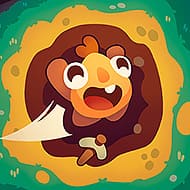




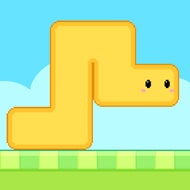
What happens when a creature does not walk but stretches? Growmi, a small orange blob with round eyes and a permanent expression of calm concentration, does not navigate its world by moving — it navigates by extending part of itself toward a destination while the other part stays anchored. This distinction matters because Growmi’s puzzle design is built entirely around the question of which part of you stays fixed while the rest of you moves. Standard platformer thinking does not help here. Something different is required.
The Stretch Mechanic and Its Constraints
Growmi moves by stretching — pressing a directional input extends Growmi one tile in that direction, with the tail anchor remaining at the origin. Pressing the directional input again extends another tile. Once fully extended, pressing the opposite direction retracts Growmi back toward the anchor, and pressing the retract until flush with the anchor changes the anchor point to the current head position. This anchor-transfer mechanic is the game’s primary control loop: extend, anchor-transfer, extend again.
The constraint that generates puzzles is maximum stretch length. Growmi can extend up to five tiles from its current anchor before it cannot extend further without retracting. This means crossing a gap of six tiles requires at least one anchor-transfer in the middle — find a ledge within the five-tile stretch radius, transfer anchor, then complete the crossing. Puzzles built around this constraint require planning the anchor positions across the entire route before moving, because a poorly chosen anchor in the middle of a crossing can leave Growmi stranded with insufficient stretch remaining to reach the next safe surface.
Growmi cannot float in open space without an anchor. If the anchor point is on a surface and the extended head is also on a surface, Growmi bridges the gap. If the head extends into open space with no surface contact, Growmi falls from the head position when it exceeds the point where gravity takes over. This falling behavior is not always bad — it is how Growmi descends in vertical sections. But unintended falls into spike pits are the most common death type in Growmi’s mid-game levels.
Puzzle Types and How They Use the Stretch
Growmi’s level design creates distinct puzzle categories from the stretch mechanic. Gap-crossing puzzles are the most common: a gap wider than five tiles with specific intermediate ledges that determine where the anchor-transfer must happen. The puzzle is finding the correct ledge sequence. Vertical puzzles require Growmi to climb surfaces using anchor-transfers up a wall, which demands understanding that the anchor can be on a vertical surface and Growmi can extend horizontally from a vertical anchor.
Button activation puzzles require Growmi’s head or body to make contact with a button surface while the anchor holds position on a separate surface. These puzzles often demand T-shaped or L-shaped extension paths — extending in one direction, then making an anchor-transfer on an intermediate ledge, then extending perpendicular to activate the button. The button trigger must be maintained while the resulting gate is navigated, which requires either Growmi’s body to span the button continuously or a separate mechanism to hold it.
Crumble ledge puzzles are Growmi’s most adversarial design type. Certain ledges crumble when Growmi’s anchor is placed on them — they hold for three seconds before disappearing, requiring the next anchor-transfer to be completed before the crumble sequence finishes. These puzzles test whether the player can execute an anchor-transfer chain under time pressure, which adds an execution demand to the spatial planning that Growmi normally makes purely about routing.
Spike Zones and the Stretch Safety Rule
Growmi dies on contact with spike tiles. Critically, the entire Growmi body counts — head, anchor, and any extended segment between them. A bridge formed by Growmi across a spike-lined corridor must thread through the corridor without any body segment touching a spike tile. This full-body collision model makes Growmi’s navigation through spike sections more demanding than simple head-avoidance games, because the path that keeps the head clear may route the body through a spike on the way.
The community’s term for finding a path through a spike section that keeps all of Growmi’s segments clear is “threading the snake,” borrowed from the visual resemblance to a snake navigating around obstacles. Threading puzzles require the player to mentally simulate Growmi’s body position at each anchor-transfer point along the route — not just where the head will be, but where the previous anchor point and bridging segments will be relative to the spikes. This multi-segment spatial reasoning is the most cognitively demanding type of puzzle Growmi generates.
Safe zones within spike sections are tile gaps where Growmi’s body can pass without contact. Identifying these gaps before starting a threading sequence is important because retracting mid-thread to try a different route wastes the anchor position that was already established. Players who attempt threading puzzles reactively — extending one segment, evaluating, extending another — find threading significantly harder than players who plan the full thread path before executing it.
World Structure and Character Growth
Growmi progresses through four named worlds: Mossy Meadow, Crystal Caverns, Sunken Temple, and Thornwood Peak. Each world’s environment changes the available surface types and introduces world-specific mechanics. Mossy Meadow uses standard ledge and spike layouts. Crystal Caverns adds ice surfaces where anchor-transfers slide before locking, adding a displacement to the planned anchor position. Sunken Temple uses water tiles where Growmi floats upward without gravity pull. Thornwood Peak uses thorn tiles that damage Growmi’s body on contact but can be passed through by the head anchor in a brief immune window.
Growmi’s visual design shows a subtle expression change across the worlds. In Mossy Meadow, Growmi’s eyes are wide and curious. In Crystal Caverns, the expression becomes more focused. By Thornwood Peak, Growmi’s expression is one of determined concentration. This arc is purely aesthetic — it does not affect gameplay — but players who notice it consistently mention it as a design detail that makes Growmi feel like a character undergoing an actual journey rather than a player avatar navigating abstract puzzles.
Star collectibles in each Growmi level require detours from the standard completion route. Most star positions are accessible with creative anchor-transfer sequences that the main route does not naturally produce. Three-star completion in Growmi requires understanding the full level layout before starting and planning a route that incorporates all three star positions without dead-ending on a spike or crumble ledge. The three-star route and the quick-completion route are almost never the same in Growmi’s harder levels.
What the Community Finds Most Satisfying — and Most Frustrating
The moment of insight in Growmi — when a threading sequence that looked impossible resolves cleanly once the correct anchor positions are identified — is consistently described as the game’s peak satisfaction moment. Players who return to Growmi after time away specifically mention the “ah, that’s how” feeling of a threading puzzle clicking as the reason they come back. The puzzle design is structured specifically to produce that moment, and it produces it reliably.
The frustration point is the crumble ledge timing requirement. Players who struggle with execution timing — who plan correctly but cannot perform the anchor-transfer chain quickly enough before the ledge disappears — find crumble sections disproportionately punishing relative to the spatial puzzle difficulty. The game does not offer a way to slow the crumble timer, and the reset is instant, which means repeated failure on crumble sections can feel like a pure reaction test rather than the logic puzzle Growmi’s core identity promises. The community is divided on whether crumble difficulty is a natural escalation or an intrusion of a different skill into a logic-based game.
How many levels does Growmi have?
Growmi contains 48 levels across its four worlds: 12 levels per world. The first two levels of each world are straightforward introductions to the world’s new mechanic. Levels 3 through 9 ramp through standard difficulty for that world’s mechanic combination. Levels 10 through 12 are the world’s challenge tier, combining the new mechanic with all prior mechanics. The four final levels — one per world’s final stage — are considered the game’s hardest individual puzzles and were designed as optional completionist targets rather than required progression gates.
Can Growmi extend diagonally?
No. Growmi only extends in the four cardinal directions. This constraint is what makes corner navigation require multi-step anchor-transfer sequences rather than single diagonal moves. Diagonal movement, if available, would significantly reduce the complexity of corner puzzles by allowing a single extension where the current design requires two. The cardinal-only constraint is the single most important design decision in Growmi — it is what makes the threading puzzles genuinely difficult rather than merely spatial navigation exercises.
Are there any timed levels in Growmi?
Beyond the crumble ledge sequences, no. The main campaign levels have no run-wide timers or speed requirements. Star collection on non-crumble levels is entirely about routing rather than execution speed. This deliberate pace-of-play design choice places Growmi firmly in the think-first-then-act puzzle tradition rather than the execution-speed platform tradition, and players who prefer the former find Growmi’s non-crumble levels a rare example of a puzzle platformer that genuinely prioritizes understanding over timing.
Growmi earns its place among puzzle platformers not by inventing a novel visual language but by committing fully to the one mechanic it chose and building 48 levels that each use it differently. The stretch and anchor system is learned in the first five levels and never modified — it just keeps producing new spatial challenges as the world types add different constraints to the same fundamental action. Whether it is threading through thorn gaps in Thornwood Peak or timing an anchor-transfer across a Crystal Caverns ice slide, Growmi presents the same question each time in a new configuration: which part of you stays fixed while the rest of you moves?
Comments
There are no reviews yet. Be the first one to write one.