
















DUBHouse









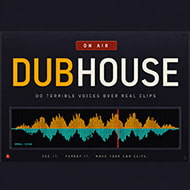
DUBHouse looks like a party game you play with a group chat and a shared laugh, but it plays like a lightweight production pipeline where one person cuts footage, tags characters, and manages a distribution pack before anyone else even opens their mic. The party-game surface is real, but underneath it there’s an actual workflow, and it rewards the player willing to learn it.
The Clip Maker as the Real Engine of DUBHouse
Nothing in DUBHouse happens without the Clip Maker first. You drop in a video, mark the start and end of each line you want dubbed, name the characters attached to those marks, and the game assembles a playable scene from that raw footage automatically. It’s closer to a lightweight video editor than a typical game menu, and it’s the one part of DUBHouse a solo-focused player can spend an entire session inside without ever hitting Record themselves.
Marking Lines Without Cutting Off a Delivery
The single most common mistake in the Clip Maker is marking a line’s window too tight. Cut it a half-second short and a strong reading gets clipped mid-word in the final mix; leave it too loose and dead air creeps into an otherwise sharp scene. Getting the timing right takes a couple of clips to learn, and it’s not something the game explains up front — you find the right margin by watching your first few marked scenes fail.
What Happens to the Original Audio
DUBHouse doesn’t just mute the source clip where a line was marked. It lifts the original voice out of the soundtrack specifically, leaving music and sound effects intact underneath whatever gets recorded over it. That’s a deliberate choice, and it’s the reason a dubbed scene in DUBHouse still feels like it’s happening inside its original setting instead of floating over silence.
Naming Characters and Why It Matters Later
Character names entered during the Clip Maker stage aren’t cosmetic — they’re what shows up when a guest is choosing which line to record, and a scene with vague or duplicate names becomes confusing fast once more than two or three people are involved. Players building packs for repeat use tend to name characters descriptively rather than generically, since a pack gets reused across multiple sessions and needs to make sense to people who didn’t build it.
Building a Pack for Someone Else to Play
Once a scene is built, it can be shared as a pack for another host to run without needing the original footage or the Clip Maker work redone. A player who enjoys the editing side of DUBHouse more than the performing side can spend most of their time here, treating the game less as a mic-passing party format and more as a small content pipeline feeding other people’s sessions.
Recording Solo Versus Recording for a Group
DUBHouse supports singleplayer, and that changes the Clip Maker’s role considerably — instead of marking lines for other people to fill, a solo player is marking and then voicing every character themselves. It’s a different rhythm of play entirely, closer to solo sketch writing than a party format, and it’s the mode players reach for when they want to build a polished pack before ever inviting friends into a room.
Where the Community’s Divide Shows Up
Not every player enjoys spending time in the Clip Maker before getting to record anything, and that’s the honest split within DUBHouse’s small community: some players treat the editing stage as half the appeal, while others see it as a barrier standing between them and the actual dubbing. Editing-first players lean on precise marking and character naming to build reusable packs. Performance-first players want someone else’s scene ready to go so they can jump straight to Record.
Noise Handling During Solo Recording
The same noise suppression that cleans up group sessions applies during solo recording too — a couple of seconds sampling the room, then up to 42 dB of steady background noise removed before your line ever hits the mix. For a player recording multiple characters back to back in one sitting, that consistency matters more than it would in a single group take, since every character’s audio needs to sit at a similar baseline in the final video.
What a First Solo Session Actually Looks Like
A first solo run in DUBHouse tends to go slower than expected — not because recording is hard, but because marking lines accurately in the Clip Maker takes longer than most players anticipate before they’ve done it once. Anyone going in expecting to have a finished scene within a few minutes usually finds the actual first session runs closer to half an hour once marking, naming, and a few recording retakes are accounted for.
Whether someone opens DUBHouse to spend an hour inside the Clip Maker or to skip straight to Record, the game ends up defined by how much of that pipeline a player is willing to touch — and a well-named, well-marked pack built once tends to outlast the session it was made for.
Comments
There are no reviews yet. Be the first one to write one.