



-

Hide and Luig
-
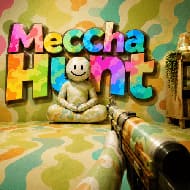
Meccha Hunt
-
Fruit Ninja
-
Toaster Dash
-
Meccha Chameleon 3
-
Meccha Chameleon 2
-

Water Color Sort
-
Stickman Chameleon
-
Paint to Hide!
-
Paint&Seek Online
-
Meccha Obby
-
Paint or Seek: Chameleon Hide Online
-
Hide ‘N Seek!
-

Paint Strike
-
Meccha Chameleon Mobile
-

A Little to the Left
-
Among Us
-

Stickman Hook
Meccha Chameleon vs Prop Hunt: Which Hide-and-Seek Game Should You Play?
Hide-and-seek multiplayer games have quietly become one of the most reliable genres for viral, low-barrier fun, and two names dominate the conversation right now: Meccha Chameleon, the 2026 breakout hit from Japanese solo developer lemorion_1224, and Prop Hunt, the genre-defining concept that started as a community mod and has since spawned countless standalone versions and clones across nearly every major engine. Both games split players into a hiding team and a seeking team, and both lean hard into comedy over competitive precision. But the way each one asks you to hide is fundamentally different, and that difference shapes everything from pacing to skill ceiling to how a match actually feels moment to moment. Here’s how they actually compare.
Where Prop Hunt Came From
Prop Hunt didn’t start as a standalone commercial release — it began life as a community-made game mode, most famously associated with Garry’s Mod, where players could shapeshift into any physics object present on a map. The idea proved so popular that it eventually spread far beyond its original engine, getting rebuilt in Unreal Engine, Unity, and various browser-based and mobile frameworks by dozens of different teams over the years. Because of that history, “Prop Hunt” today isn’t really one single game — it’s closer to a genre template that gets reimplemented over and over, with wildly different production values, player counts, and feature sets depending on which specific version you land on.
Meccha Chameleon, by contrast, is a single, self-contained commercial release with one development team steering its direction. That difference matters more than it might seem: comparing the two isn’t really an apples-to-apples matchup between two games built by similarly sized studios, but a comparison between a focused, actively updated indie title and an entire loosely connected family of community projects that share a core idea.
The Core Concept
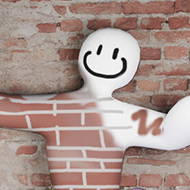
Prop Hunt’s premise is simple: hiders shapeshift into an object already present in the environment — a chair, a trash can, a traffic cone — and freeze in place among dozens of identical real props, hoping the seeking team can’t tell the difference. Meccha Chameleon flips that idea sideways. Instead of becoming an object, players keep their humanoid shape and paint their pure-white bodies to visually mimic whatever surface or backdrop they’re standing against, blending in the way an actual chameleon would rather than disguising themselves as furniture.
- Prop Hunt: Hide by becoming an object that already exists on the map
- Meccha Chameleon: Hide by manually painting your body to match a surface or background
How a Round Actually Plays Out
In most versions of Prop Hunt, the transformation into a prop is close to instantaneous — a hider clicks on an object and immediately becomes it, then has to decide where to reposition or whether to stay put. The bulk of the round’s tension comes afterward, during the seeking phase itself. Meccha Chameleon adds a distinct extra phase before the hunt even begins: players start in a lobby, move into a preparation window where they pick a hiding spot and actively paint their body color by color, and only then does the hunt phase start with Hunters released onto the map. That preparation window turns the opening minutes of a Meccha Chameleon round into something closer to a timed art exercise, with players sampling colors, shading toward the direction of nearby light sources, and locking in a pose before the clock runs out — a rhythm that simply doesn’t exist in Prop Hunt’s more instant transformation.
Skill Expression: Object Choice vs Artistic Skill
This is where the two games diverge the most. Prop Hunt’s skill ceiling comes from map knowledge and object selection — picking a prop that’s common enough to blend in, positioning it in a spot that makes sense, and staying frozen under pressure. It rewards familiarity with a map’s prop density and the seeker’s likely search patterns.
Meccha Chameleon’s skill ceiling is closer to a drawing challenge layered on top of a hiding game. Painting your body convincingly requires matching color gradients, working around your own silhouette, and choosing a pose that sells the illusion, all under a time limit. A skilled painter with mediocre map knowledge can still pull off a great hide, and a great hiding spot with sloppy paintwork will still get spotted. The game’s own store description leans directly into this, framing “artistic skill” as just as important as the hiding spot itself.
Neither game lets the seeking side win by simply pointing at the right object, either. Meccha Chameleon’s Hunters play in first-person with no flashlight and a limited, host-configurable ammo pool, and have to physically land a shot on a Hider to eliminate them — missing costs ammo, and if every Hunter runs dry before time expires, the Hiders win outright. Prop Hunt’s hunters work under a similar constraint in most versions, usually carrying a weapon with capped ammo that punishes spraying at every suspicious object in the room. In both games, spotting the disguise is only half the job; confirming the read with an actual hit is the other half.
| Feature | Meccha Chameleon | Prop Hunt |
|---|---|---|
| Hiding Method | Paint your body to match the environment | Transform into an existing map object |
| Primary Skill | Freehand color matching and pose selection | Object choice and positional awareness |
| Seeker Tools | First-person view, no flashlight, limited ammo required to eliminate | Visual inspection, typically paired with a limited-ammo weapon |
| Recommended Players | 2–10 | Varies widely by version, often 6–16+ |
| Price | $5.99 one-time purchase | Free in most community versions; paid in some standalone releases |
| Extra Modes | Infection, Double, Reverse Chicken Race | Varies by version, often includes weapon-based hunter modes |
| Development Model | Single team, ongoing near-weekly patches | Many independent versions across different engines |
| Custom Content | Steam Workshop support for custom maps | Varies by version; some support mods, others don’t |
Pacing and Round Structure
Because Prop Hunt hiders are typically static once they’ve transformed, rounds tend to hinge on a tense standoff: seekers scanning a cluttered room, hiders holding perfectly still and hoping their prop choice doesn’t stand out. Meccha Chameleon rounds have a more active opening phase, since players are actively painting themselves for a stretch of time before settling into position, which adds a light prep-and-execute rhythm that Prop Hunt’s more instantaneous transformation doesn’t really have.
- Prop Hunt rounds emphasize stillness and object logic once hiding begins
- Meccha Chameleon rounds add an active painting phase before the actual hide-and-seek starts
- Both games reward hiders who can read how seekers are likely to search a given map
- Meccha Chameleon’s limited Hunter ammo means a round can end early if seekers miss too often, something less commonly enforced in Prop Hunt variants
Modes Beyond the Basics
Meccha Chameleon has expanded past its original Normal mode with a small but distinct set of additional modes. Infection turns caught Hiders into Hunters for the rest of the round, gradually flipping the numbers. Double has every player hide first and then hunt afterward, with the most successful finder declared the winner. A later addition, Reverse Chicken Race, asks players to identify a hidden participant purely from the quality of their body paint, rewarding sharp observation as much as hiding skill.
Prop Hunt’s mode variety depends heavily on which version or community server you’re playing, since the concept has been rebuilt many times across different engines and platforms. Some versions add hunter weapons, power-ups, or timed waves, while others stick closely to the original find-the-odd-prop-out formula. This fragmentation cuts both ways: it means there’s a huge amount of variety to explore across different Prop Hunt implementations, but also that quality and feature depth aren’t consistent from one version to the next the way they are in a single actively developed title like Meccha Chameleon.
Custom Content and Community Maps
Meccha Chameleon supports Steam Workshop, and custom community maps have become a significant part of how players extend the game beyond its official map rotation — everything from recreations of other games’ art styles to entirely original settings has shown up in the Workshop within weeks of launch. Because Workshop maps update automatically as of a recent patch, staying current with a modded map no longer requires manually re-downloading it every time the creator pushes a change. Prop Hunt’s approach to custom content depends entirely on which version you’re in: some, particularly those built on more open platforms, have thriving custom map communities of their own, while others are closed, fixed-map experiences with no modding support at all.
Presentation and Tone
Meccha Chameleon’s hand-drawn, colorful art style and pure-white default character model give it a distinct visual identity that’s immediately recognizable in clips and streams, which has helped fuel its viral spread. Prop Hunt’s presentation varies enormously depending on which version you’re playing — some lean cartoonish, others go for a more grounded, realistic look, since the concept has been reimplemented so many times by different teams with different visual goals.
Which One Should You Play?
The right choice mostly comes down to what kind of hiding challenge you find more satisfying, and how much you value a single, consistently updated experience versus a wide field of community variety.
- Pick Meccha Chameleon if: you want a hiding mechanic with a genuine creative skill component, enjoy a colorful hand-drawn aesthetic, appreciate frequent official updates from one dedicated team, and don’t mind a small one-time purchase for a tightly focused experience.
- Pick Prop Hunt if: you want the classic, no-frills version of the genre, prefer free-to-play access, enjoy exploring different community-made takes on the same idea, and like the pure guessing-game tension of scanning a room full of near-identical objects.
- Play both if: you’re building out a party-game rotation with friends, since the two hiding mechanics feel different enough that they don’t get old covering the same ground twice.
Both games ultimately succeed for the same reason the genre keeps resurging every few years: hiding badly is funny, seeking badly is funny, and watching either happen to a friend is even funnier. Meccha Chameleon just gets there through a paintbrush instead of a prop list, and that small shift — plus a single team pushing frequent updates rather than a scattered field of community remakes — is enough to make it feel like a genuinely fresh, actively maintained take rather than another reskin of a familiar idea.