


-

Hide and Luig
-

Meccha Hunt
-

Fruit Ninja
-
Toaster Dash
-
Meccha Chameleon 3
-

Meccha Chameleon 2
-

Water Color Sort
-

Stickman Chameleon
-

Paint to Hide!
-

Paint&Seek Online
-

Meccha Obby
-

Paint or Seek: Chameleon Hide Online
-

Hide ‘N Seek!
-
Paint Strike
-

Meccha Chameleon Mobile
-

A Little to the Left
-

Among Us
-

Stickman Hook
Rainbow Monster Hideout 3D



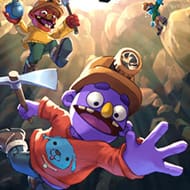

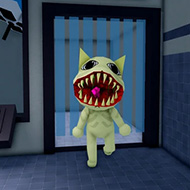





You crouch inside a cardboard box as heavy footsteps pass just outside, and for a few seconds you’re not sure whether they’re moving away or circling back. That uncertainty is the entire mood of Rainbow Monster Hideout 3D, a survival game that trades classic hide-and-seek tension for something closer to a horror night that refuses to end quietly.
| Genre | Survival horror hide-and-seek |
| Setting | A hideout patrolled by Rainbow Friends monsters |
| Objective | Survive each night by completing tasks |
| Multiplayer | Cooperative missions with teammates |
Surviving the Night in Rainbow Monster Hideout 3D
The premise of Rainbow Monster Hideout 3D is straightforward on the surface: you’re trapped in a hideout with the Rainbow Friends, brightly colored monsters that look almost friendly right up until they catch you. Each night is its own survival stretch, and the goal isn’t just to avoid being caught but to actively complete tasks scattered around the hideout before time runs out, which means you can’t simply hunker down in one safe spot for the whole round.
That combination — objective-driven tasks layered on top of active monster threats — is what separates Rainbow Monster Hideout 3D from a simpler chase game. You’re constantly weighing whether it’s safe to leave cover to finish a task or whether a Rainbow Friend nearby makes that risk too costly. Early in a session, most players lean cautious, staying near boxes and corners, and only push toward exposed tasks once they’ve gotten a read on where the monsters are patrolling.
Boxes are the most reliable hiding spot in the hideout, and the game leans on them heavily as the go-to cover option. Ducking into one isn’t a guaranteed escape, though — Rainbow Friends will check nearby boxes if they’ve lost track of you close by, which means players who camp in the same box round after round eventually get found, while players who treat boxes as temporary cover and keep repositioning tend to last longer.
Cooperating With Teammates
Rainbow Monster Hideout 3D is built around cooperative play, and that changes the entire risk calculation compared to going in solo. Splitting up to cover more tasks at once finishes missions faster, but it also means fewer eyes watching for a Rainbow Friend closing in on any one teammate. Sticking together is safer moment to moment, but it slows down task completion enough that the timer becomes a real threat by the later stretch of a night.
Players who favor the cautious, grouped-up approach tend to describe their runs as slower but more consistent, rarely losing a teammate but occasionally running out of time before finishing every task. Players who split up and move fast report the opposite trade-off — quicker completions when things go well, but a much higher chance that one teammate gets caught and has to be dealt with mid-mission. Neither approach is objectively correct, and which one works better often comes down to how well a specific group communicates in the moment.
Communication ends up being the real skill the game is testing, more than raw reflexes. A teammate calling out that a Rainbow Friend just turned down a nearby hallway is often more valuable than any individual player’s ability to sneak past it alone, since coordinated movement lets the group route around danger instead of each player guessing independently.
What Makes the Rainbow Friends Genuinely Threatening
Part of what makes Rainbow Monster Hideout 3D effective is the gap between how the Rainbow Friends look and how they behave. Their bright, almost cheerful color palette sets up an expectation the game deliberately undercuts once one of them corners you — the sudden shift from playful visuals to real danger is a big part of why new players tend to underestimate the threat on their first night. That contrast is a divisive point among players too; some find it genuinely unsettling in a way that elevates the whole experience, while others feel the cheerful design undercuts the horror atmosphere the game is otherwise going for.
The monsters don’t behave identically either, and learning the differences between how they search and react is part of surviving longer nights. Players who’ve spent real time in the hideout start recognizing behavioral tells — subtle shifts in movement or direction that signal whether a Rainbow Friend is about to turn toward your hiding spot or move on entirely. That kind of pattern reading only comes from repeated nights, which is exactly the kind of detail that separates players who’ve logged real hours from players still on their first few attempts.
How do you avoid getting caught by the Rainbow Friends?
Staying near boxes and cover while limiting how long you spend in open areas is the most reliable approach, and relocating between hiding spots rather than staying in one box the whole night reduces the chance a Rainbow Friend eventually checks your exact location.
What happens if you can’t finish all the tasks before time runs out?
Running out of time without completing every task typically means failing that night’s mission, which is why balancing task speed against caution matters as much as avoiding the monsters directly.
Is Rainbow Monster Hideout 3D better played solo or with teammates?
The game is designed around cooperative play, and while solo attempts are possible, coordinating with teammates to split tasks and share monster positions generally makes surviving a full night significantly more manageable.
Between the boxes that only offer temporary safety and the Rainbow Friends whose cheerful look hides a real threat, Rainbow Monster Hideout 3D turns a simple hiding premise into a tense cooperative survival test. Learning when to trust a hiding spot and when to abandon it for a better one is what eventually separates a full night survived from a mission cut short.
Comments
There are no reviews yet. Be the first one to write one.