



-

Hide and Luig
-

Meccha Hunt
-

Fruit Ninja
-

Toaster Dash
-
Meccha Chameleon 3
-

Meccha Chameleon 2
-

Water Color Sort
-
Stickman Chameleon
-

Paint to Hide!
-

Paint&Seek Online
-

Meccha Obby
-

Paint or Seek: Chameleon Hide Online
-

Hide ‘N Seek!
-

Paint Strike
-
Meccha Chameleon Mobile
-

A Little to the Left
-

Among Us
-

Stickman Hook
House 2 Demo








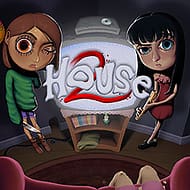
House 2 Demo looks like a brief teaser clip of a horror game, but it plays like a fully-loaded reactive house compressed into a shorter runtime — nothing about the pacing feels stripped down, even though the map is.
A Short Runtime, a Fully Reactive House
State persistence — the house’s habit of remembering every door you’ve opened, every item you’ve moved, every threat you’ve disturbed — is the one mechanic the demo refuses to simplify. Even across a handful of rooms, the house behaves exactly like the full game promises it will, which is precisely why the demo works as a preview rather than a watered-down sample. Nothing here resets on a hidden timer, and players who test this deliberately, by leaving a door open and circling back several minutes later, consistently find it exactly where they left it.
Tabby carries the entire demo, and the rooms are arranged to teach the same lesson the full story opens with: caution matters less than attention. Players who treat the demo as a quick walk-through tend to miss the small environmental changes that reward slower, more deliberate movement, and the difference in experience between a five-minute rush and a fifteen-minute exploration is noticeably wide for such a compact space.
Players coming from more traditional jump-scare horror games often describe an adjustment period in these opening minutes, since House 2 Demo rarely telegraphs danger the way genre conventions usually train players to expect. Meanwhile, players already familiar with the original House tend to move through these same rooms with more confidence, recognizing the provoke-and-retreat logic from the first game almost immediately.
What the Demo Teaches About Marty and Timing
Marty the snail’s small physical reactions — a flinch, a sudden pull into his shell — work as the demo’s clearest early-warning system, and whether progress or discoveries here carry into the full game is a common early question; they don’t, since the demo runs as a separate, self-contained slice, but the instinct to watch Marty closely absolutely transfers once you start the longer story. Community threads around the demo frequently reference “watching the snail” as shorthand for this habit, and it’s become one of the more recognizable pieces of vocabulary attached to the game this early.
By the time the storm outside peaks near the demo’s final stretch, most players have already internalized this without being told directly, which says a lot about how efficiently the shorter format teaches the house’s rules. That final stretch is also where the pacing tightens most noticeably, giving the otherwise patient opening a genuine sense of mounting pressure before the demo ends.
Timing matters here in a way that’s easy to underestimate on a first attempt. Players who rush Marty’s cues, moving before he’s finished reacting, tend to walk directly into the exact danger he was signaling, while players who pause even briefly after noticing his behavior almost always avoid the same outcome. It’s a small window, but a consistent one.
The One Room Most Players Get Wrong
Dolly, the doll positioned in the upstairs bedroom, is the demo’s most commonly misread moment. She does nothing the first time you pass her, which leads plenty of first-time players to dismiss her entirely — only for her to have quietly turned to face the door on a second pass, a detail easy to miss if you’re moving quickly. Players who catch this shift early tend to treat the rest of the demo with noticeably more caution, since it’s the clearest proof that the house is tracking behavior rather than running on scripted timers.
Whether Melody appears anywhere in this shorter slice is another question players raise before starting; she doesn’t, since the demo’s compressed scope stays within the earlier stretch of Tabby’s story, well before Melody’s sections open up in the full narrative. This has led to some minor confusion in early impressions from players who assumed her presence based on marketing for the full game, so it’s worth setting that expectation clearly before starting.
First-time horror players in particular tend to fixate on Dolly once they notice her shift, sometimes backtracking repeatedly just to confirm what they saw, while more experienced genre veterans tend to note it once and move on, treating it as confirmation of the house’s rules rather than a standalone scare.
Deciding If the Pacing Is for You
The demo’s biggest limitation is also its most honest quality — it’s short enough that some players feel it doesn’t give the house’s reactivity room to fully land, while others argue that’s exactly the point of a preview. Both reactions show up regularly in early impressions, and neither is unreasonable given how differently players weigh a compact fifteen-minute session against a longer, more developed narrative arc.
Players deciding based on the demo alone should weigh their reaction to that final stretch near the storm’s peak most heavily, since it’s the clearest indicator of how the full story’s escalating pressure will eventually feel across a much longer runtime.
Between Dolly’s patient, easy-to-miss menace and Marty’s quiet warnings, House 2 Demo gives players just enough of the house’s logic in a shorter form to judge, honestly, whether the full story’s pacing is one they want to commit to.
Comments
There are no reviews yet. Be the first one to write one.