


-
Hide and Luig
-

Meccha Hunt
-
Fruit Ninja
-
Toaster Dash
-
Meccha Chameleon 3
-
Meccha Chameleon 2
-

Water Color Sort
-
Stickman Chameleon
-
Paint to Hide!
-
Paint&Seek Online
-

Meccha Obby
-

Paint or Seek: Chameleon Hide Online
-
Hide ‘N Seek!
-
Paint Strike
-
Meccha Chameleon Mobile
-
A Little to the Left
-
Among Us
-
Stickman Hook
Tag
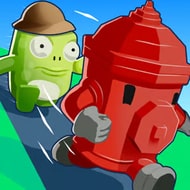


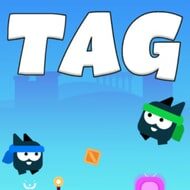
You spot the tagger locking onto your trail near the pyramid ramps, fake a turn toward open sand, then launch off a bounce pad a half-second before their hand connects — and just like that, someone else is “it.” That exchange is what Tag is about: reading where a chaser wants you to go, then going somewhere else.
| Genre | Local multiplayer chase game |
| Players | 2 to 4 on one device |
| Maps | Standard, Wintery, Sandy Egypt |
| Core Mechanic | Tag the runners before the round clock runs out |
| Key Tools | Bounce pads and single-use teleporters |
Bounce Pads and Teleporters in Tag
One player is the tagger, everyone else runs, and a tag flips roles instantly. What decides matches is how well you read the terrain. Bounce pads fling whoever lands on them into the air, letting runners clear gaps a sprint never could, and letting a tagger close distance on someone who thought their escape was clean. Teleporters swap your position instantly, which matters most when a chaser has you cornered.
New players almost always make the same mistake early: they treat the game like a straight footrace and run in a line. That works for a few seconds before the tagger cuts an angle and closes the gap, because the maps are built around verticality, not open lanes. Chain bounce pads instead of running around them and you cover distance a ground-bound tagger can’t match.
The teleporter only works once. It disappears the moment you use it, so burning it just because a tagger is nearby often backfires when they corner you again later with no escape left.
The Three Maps: Standard, Wintery, and Sandy Egypt
Tag doesn’t change its rules between maps, but it changes the geometry you’re reading, and that’s where the game’s replay value comes from. The Standard grassy map is where most people learn — wide platforms, forgiving spacing, bounce pads close enough together that beginners can chain them without much practice.
The Wintery map narrows things. Icy ledges mean momentum carries further than expected, so a jump timed the way it works on Standard often overshoots, sending a runner off the edge and handing the tagger an easy win. By the time you’ve played a dozen rounds here, you compensate for the slide before you even land.
Sandy Egypt flips pacing again with pyramid structures that break sightlines. Taggers lose track of runners behind the sloped stone edges, and patient players exploit that gap — hanging back near a corner until the tagger commits to chasing someone else, then slipping out the opposite side.
Becoming the New Tagger
The moment a tag lands, control flips completely, and that transition separates casual players from ones who’ve studied the maps. A runner juking bounce pads a second ago now has to think like a hunter — players who’ve logged real time in Tag describe this flip as the hardest habit to build.
Difficulty isn’t scripted through levels — it scales with who you’re playing against. Against friends who don’t know the maps, chasing is trivial. Against players who’ve learned to bait a bounce pad jump and cut you off mid-air, every tag takes setup: force someone toward a dead end, fake a lunge, then commit only once you’ve read the pattern.
Players bring up constantly how brutal the closing seconds feel when you’re stuck as tagger. Everyone else can play defensively and just avoid you, while you’re racing the clock with something to lose. It’s a small design choice, but it’s why rounds rarely feel anticlimactic.
Couch Multiplayer Dynamics in Tag
Tag is built around shared-screen play, which is both its strongest hook and the thing players criticize most. There’s something the format nails that matchmaking-based chase games rarely replicate: the shouting when someone bounce-pads over your head right as you thought you had them cornered, which only happens because everyone’s watching it unfold on the same couch.
The tradeoff is real. Plenty of players search for ways to play with friends who aren’t in the same room, and the honest answer is that Tag was built around local multiplayer first, so anyone hoping for matchmaking against strangers will be disappointed. It’s the one drawback that comes up whenever the game gets discussed.
A few habits make shared-keyboard matches run smoother:
- Agree on control zones so nobody fights over keys mid-chase.
- Pick the Standard map first if anyone hasn’t played before.
- Rotate who starts as tagger instead of always picking whoever lost last.
- Call out teleporter spots out loud on Sandy Egypt, where they’re easy to forget.
Tag rewards split-second decision-making, the kind that keeps local multiplayer games in a friend group’s rotation long after flashier titles get forgotten, and once a last-second teleporter saves someone from a tag they had no business surviving, it’s obvious why the format still works.
Comments
There are no reviews yet. Be the first one to write one.