


-

Hide and Luig
-

Meccha Hunt
-

Fruit Ninja
-

Toaster Dash
-
Meccha Chameleon 3
-

Meccha Chameleon 2
-

Water Color Sort
-

Stickman Chameleon
-

Paint to Hide!
-

Paint&Seek Online
-

Meccha Obby
-

Paint or Seek: Chameleon Hide Online
-

Hide ‘N Seek!
-

Paint Strike
-

Meccha Chameleon Mobile
-

A Little to the Left
-

Among Us
-

Stickman Hook
Nextbot Graveyard








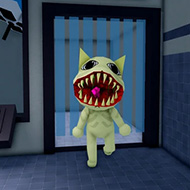

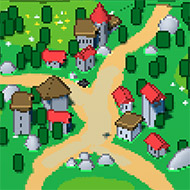

The title promises another meme nextbot chase reel, but Nextbot Graveyard turns out to be a slow, headphones-on hunt through a cemetery where silence is scarier than any jumpscare. You spend most of a run listening for a signal instead of running from anything.
Munci hands you a portable radio at the start and asks for help finding his five missing children scattered somewhere in the graveyard, with one gift awarded for every child you track down. Everything else in the game builds around that single radio and what it does, and doesn’t, let you hear.
Munci’s Missing Children and the Radio
Munci lost five children somewhere in the graveyard and hands you a portable radio at the start, its dial the only real tool you’re given for the rest of the game. The radio picks up faint signals when you’re near one of Munci’s kids, and tuning it accurately is the entire method for tracking them down. It goes quiet during safe zones and shuts off completely once a stage’s ending sequence begins, so you can’t lean on it as a constant safety net.
Munci himself is unusual for a nextbot, since he’s the one friendly face asking for your help instead of chasing you down. That reversal is one of the first things new players mention after a run.
Point-and-click interactions handle the smaller tasks, picking up clues and combining items, while the radio stays the tool doing the actual heavy lifting.
Reading Static Instead of Running
Beginners treat Nextbot Graveyard like a chase game and try to outrun whatever they hear coming, which rarely works, since several of the graveyard’s threats move faster than you do. The better habit is stopping to read what the static is actually telling you before committing to a direction. Signal strength changes depending on which way you’re facing and how close you are to a hiding spot, and ignoring that information is usually what gets a run cut short.
Players used to twitch-reflex horror games often struggle here first, since panicking and sprinting is usually the wrong answer. Staying still and listening is frequently the safer move.
By the time you reach the second or third stage, reading the radio’s static becomes second nature, and that shift is when the game starts feeling less punishing.
The Nextbots Waiting on Other Channels
Tune to the wrong frequency and you risk pulling in something hostile instead of one of Munci’s children. Named threats like El Silbón, Honeybee, Maxwell, and Froggy each behave differently once they notice you.
- El Silbón, whose presence is telegraphed through changing static long before you see him
- Honeybee, one of the faster threats once it locks onto a signal
- Maxwell and Froggy, named nextbots tied to specific channels
None of them chase blindly forever, and learning where each one tends to linger matters more than raw reaction speed. That roster is also where most of the game’s personality lives, since the graveyard itself stays fairly sparse outside of what’s hunting you through it.
Collecting All Five Gifts in Nextbot Graveyard
Each of the five stages ends with one of Munci’s children found and one gift added to the collection, and gathering all five is the actual win condition. There’s no shortcut between stages, each one has to be solved on its own using whatever the radio and the environment give you. The gifts double as a simple progress tracker, so it’s always clear how much of the graveyard is left to search.
Later stages layer more hostile channels onto the same core loop, so the search takes longer even though the tools available barely change.
Reaching all five gifts is usually what separates a casual playthrough from the players chasing a clean, no-detection run through Nextbot Graveyard.
Why Nextbot Graveyard Divides Horror Fans
The whole experience leans on audio cues more than almost anything else in the genre, and that choice is exactly what splits opinion. Players who lean into the listening-based design tend to find it genuinely unsettling in a way louder nextbot games rarely manage. Others find the pacing too slow for what they expected from a nextbot horror game, especially in the stretches between radio signals.
It’s also noticeably harder to enjoy without sound, since so much of the tension depends on hearing static shift before you see anything.
Whether that trade-off is worth it tends to depend on what a player wanted going in: a scare a minute, or a slow search that occasionally turns terrifying.
Nextbot Graveyard earns its name honestly: Munci’s search never turns into a straightforward chase, it stays a patient hunt through static, half-heard signals, and the five gifts that prove you actually found what he was looking for.
Comments
There are no reviews yet. Be the first one to write one.