


-
Hide and Luig
-
Meccha Hunt
-
Fruit Ninja
-

Toaster Dash
-
Meccha Chameleon 3
-

Meccha Chameleon 2
-

Water Color Sort
-
Stickman Chameleon
-
Paint to Hide!
-
Paint&Seek Online
-
Meccha Obby
-

Paint or Seek: Chameleon Hide Online
-
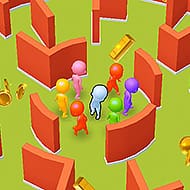
Hide ‘N Seek!
-

Paint Strike
-
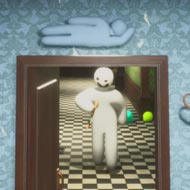
Meccha Chameleon Mobile
-
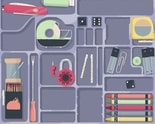
A Little to the Left
-

Among Us
-

Stickman Hook
A Little to the Left





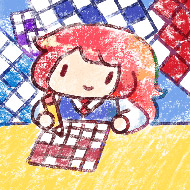

A Little to the Left looks like a pastel-colored fidget toy, all soft drawers and painted mugs, but it plays like a logic puzzle collection that expects you to reverse-engineer a rule nobody states out loud. Every level looks like simple tidying until the shapes refuse to sit right, and you realize the real task is figuring out what invisible logic the game is actually asking for.
That gap between appearance and actual demand is the entire hook. Chapter after chapter, ordinary household objects, kitchen clutter, and eventually shells and telescopes all get filtered through the same quiet puzzle of what belongs where.
| Genre | Puzzle, Casual |
| Category | Puzzle Games, Casual Games |
| Chapters | Five main chapters plus two expansions |
| Core Mechanic | Drag-and-drop tidying with hidden sorting rules |
| Puzzle Count | Around eighty puzzles across the main chapters |
| Extra Mode | Daily Tidy Delivery, a rotating daily puzzle |
How A Little to the Left Structures Its Chapters
The game splits into five main chapters that escalate in scope. Home Sweet Home opens with twenty puzzles built around ordinary household clutter, Lost Recipes moves into the kitchen for sixteen more, and Nitty Gritty spends its sixteen puzzles on drawers full of loose odds and ends. Inner Nature then shifts outdoors for fifteen puzzles built around leaves, shells, and plant trimming, while the final chapter, Near Earth Organizer, closes the main story with twelve puzzles set among telescopes, frames, and mirrors.
Two expansions extend that structure further, Cupboards & Drawers and Seeing Stars, both slotting new puzzle sets into the same chapter-based flow. Neither reinvents how A Little to the Left plays, they just add more rooms to tidy.
Each chapter also keeps a distinct visual identity, so jumping from the kitchen shelves of Lost Recipes into the telescopes of Near Earth Organizer feels like a genuine change of scenery rather than a reskin. It’s a small touch, but it keeps eighty-plus puzzles from blurring together.
Sorting Pencils, Jars, and Everything Between
Individual puzzles like Colored Pencils, Sticky Notes, and Books ask you to drag scattered objects into an arrangement that feels right, but the game never states the rule out loud. Sometimes it’s color, sometimes it’s size, and sometimes it’s a pattern you only notice once half the pieces are already in place. Kitchen puzzles such as Soup Cans, Jars, Spoons, and Bowls repeat that same discovery loop in a different setting, which is part of why the pacing rarely feels repetitive even though the underlying mechanic barely changes.
- Colored Pencils and Sticky Notes in Home Sweet Home
- Soup Cans and Spoons in Lost Recipes
- Leaves and Shells in Inner Nature
None of these puzzles share an explicit rulebook, and that’s intentional. The pattern recognition itself is the game, not a means to an end.
Players who enjoy quiet, observational puzzles tend to notice the shared logic across chapters quickly, turning what looks like a new puzzle type into a familiar rhythm. That familiarity is exactly what keeps the pacing comfortable across nearly eighty separate puzzles.
What A Little to the Left Counts as Solved When Answers Vary
Not every puzzle in A Little to the Left has one correct layout. Completed levels are marked with a star that appears only partially filled whenever an alternate solution exists, which is the game’s quiet way of telling you there’s more than one way to have gotten it right. Several reviewers have described sections of the game as an obtuse puzzle experience where the intended logic isn’t obvious from the pieces alone.
It’s a fair criticism, and one the developers seem to have taken seriously. Later chapters tend to signal their sorting rules a little more clearly than the earliest puzzles in Home Sweet Home did.
Completionists chasing every partially-filled star into a full one will spend real time here. Everyone else can move on the moment a puzzle clicks into any valid shape.
The Cat’s Habit of Undoing Your Work
A recurring cat shows up on select levels and treats your careful arrangement as an invitation, batting objects out of place while you’re mid-puzzle. Beginners often freeze up the first time it happens, unsure whether the interference counts against them somehow. It doesn’t, but the moment still injects a burst of urgency into what is otherwise one of the calmest puzzle games available.
Long-time players tend to bring the cat up first when describing A Little to the Left to someone new. That says a lot about how memorable a few seconds of chaos can be inside a game this unhurried.
Not everyone finds it charming, and a few players would rather the cat stayed out of certain fiddly puzzles entirely. It remains one of the more debated small touches in the whole game.
Where New Organizers Get Stuck
The most common beginner mistake is overthinking simple puzzles, hunting for a complicated rule when the answer is really just visual balance. Difficulty here doesn’t climb through timers or precision, it climbs through ambiguity, and by the time you reach Nitty Gritty’s drawers full of loose coins and batteries, the sorting rules stop being obvious at a glance. That shift catches plenty of players who breezed through the first chapter without a second thought.
Players who like methodical, spatial puzzles tend to adjust quickly to that rising ambiguity. Those drawn in purely by the cozy aesthetic sometimes hit a wall around the third chapter and need a short break.
Neither response is wrong, and the game’s low-stakes pacing makes stepping away easy. Nothing about the experience punishes taking your time.
The Let It Be Skip and When to Reach for It
Every puzzle can be abandoned through the Let It Be option in the pause menu, which skips the level outright with no penalty attached. It exists specifically for puzzles whose logic refuses to click no matter how long you stare at the pieces. It’s one of the more player-friendly concessions the game makes toward its own occasional obtuseness.
The same option carries over into Daily Tidy Delivery, the rotating daily puzzle mode. A single stubborn day never has to break the habit of checking in.
Some players treat Let It Be as a last resort, others reach for it the moment a puzzle stops feeling fun. Both approaches are built into how the game expects to be played.
Symmetry and Nature Puzzles in the Inner Nature Chapter
Inner Nature trades household clutter for organic material, and puzzles like Leaves, Shells, and Plant Trimming ask for a different kind of eye than the earlier chapters trained. Symmetry and gradient matter more here than strict categorization. Gems appear too, rewarding subtle shifts in shape and shade over obvious sorting.
The visual logic feels more intuitive once color and shape take over from strict sorting. Fewer players reach for Let It Be here than in the chapters before it.
It’s a deliberate pacing choice, giving the back half of the main game some breathing room before Near Earth Organizer closes things out. That breathing room is part of why Inner Nature gets singled out fondly.
Cupboards, Drawers, and the Puzzles Beyond the Main Chapters
The Cupboards & Drawers expansion and the Seeing Stars content both add puzzle sets that slot into the existing chapter structure rather than introducing a separate game mode, which keeps the pacing consistent for players who finish the core five chapters. Combined with Daily Tidy Delivery, there’s a steady trickle of new puzzles well past the credits. Between the main chapters, the expansions, and the daily puzzles, the roughly eighty core levels stop being a ceiling and start feeling like an introduction.
Newer players often don’t touch the expansions until well after finishing Near Earth Organizer. There’s no rush, since none of the added puzzles gate story content behind them.
For anyone who treats tidying as a wind-down ritual, that steady trickle of daily and expansion puzzles is the actual long-term draw. The five main chapters just get you in the door.
A Little to the Left never raises its voice to make its point, and that’s exactly why the cat knocking over a perfectly sorted drawer, or a star that stays half-filled until you find the second solution, sticks with players long after Near Earth Organizer’s credits roll.
Comments
There are no reviews yet. Be the first one to write one.