


-

Hide and Luig
-

Meccha Hunt
-

Fruit Ninja
-

Toaster Dash
-

Meccha Chameleon 3
-

Meccha Chameleon 2
-

Water Color Sort
-
Stickman Chameleon
-

Paint to Hide!
-

Paint&Seek Online
-

Meccha Obby
-

Paint or Seek: Chameleon Hide Online
-

Hide ‘N Seek!
-

Paint Strike
-

Meccha Chameleon Mobile
-

A Little to the Left
-

Among Us
-

Stickman Hook
MindMindMind






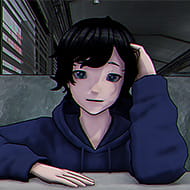





In MindMindMind, the story opens on a condition you never chose: Geist has been at your side since childhood, unseen by anyone else, and by the time the first scene ends that single fact already colors how you read every line of dialogue that follows. He is not a metaphor or a mood. He is a ghost who considers you his, and the game spends its opening stretch making sure you understand what that means before it hands you any real control.
Geist’s Grip Before the Story Begins
Geist is affectionate in the way a locked door is affectionate: constant, watchful, and unwilling to let anything else in. He talks to you privately, reacts to your choices with a jealousy that rarely announces itself as jealousy, and treats ordinary teenage milestones like starting college as threats to be managed. The game leans on otome-style presentation, letting you set a name and pronouns for your character, which keeps his fixation feeling personal rather than generic.
Players who like their horror-romance slow and internal tend to respond best to this pacing. Nothing about Geist is loud in the early chapters; he tests boundaries with small comments and long silences, and the game trusts you to notice the pattern before it spells it out.
Kalei and the Pull of an Ordinary Friendship
Kalei is introduced as the opposite of Geist in almost every way: present, physical, easy to talk to, and unaware of the ghost who has been shaping your life for years. Choosing to spend time with Kalei is the game’s real inciting incident, and it is where the dialogue system starts to matter beyond flavor text.
- Conversation choices that build trust with Kalei over several scenes
- Private moments with Geist where his responses shift based on how close you’ve grown to Kalei
- Small refusals or acceptances that quietly lock certain reactions later
Completionists chasing the CG gallery tend to replay this stretch multiple times just to see how differently Geist responds when Kalei is kept at a distance instead.
How Pressure Builds Once Geist Notices
Once Geist notices how much time you’re spending with Kalei, the tone shifts from watchful to openly possessive, and the game escalates in stages rather than a single twist.
- Subtle jealousy expressed through offhand remarks and small acts of control
- Direct confrontation where Geist questions your loyalty outright
- A final push where his mind games stop being subtle at all
This escalation is one of the more debated parts of the game in player discussion: some find the slow buildup genuinely unsettling in a way few visual novels manage, while others feel the middle stretch drags before Geist’s behavior turns openly threatening. Both reactions come up constantly, and neither is wrong given how deliberately the pacing is built.
Endings in MindMindMind
By the time you reach the final chapter, the accumulated weight of every scene with Geist and every scene with Kalei determines which of several endings plays out. The unlockable CG and ending gallery rewards players who go back and deliberately choose differently, and full voice acting for both love interests makes replaying specific routes feel worthwhile rather than repetitive.
Questions Players Ask About MindMindMind
Does every choice affect which ending you get?
Not every line matters equally, but choices tied to Kalei and to Geist’s jealousy accumulate quietly in the background, and the game tracks them closely enough that two similar-looking playthroughs can end very differently once the final chapter arrives.
Can you avoid Geist’s route entirely?
You can lean the story toward Kalei by consistently choosing him over Geist in key scenes, though Geist remains present throughout since his attachment to you is the game’s core premise rather than an optional subplot.
How long does it take to finish?
A single playthrough runs roughly an hour and a half to two hours, short enough that most players return for a second pass through different choices soon after finishing the first ending.
What stays with most players after finishing MindMindMind is not a jump scare or a puzzle solved but the discomfort of realizing how ordinary Geist’s manipulation sounds in the moment, and how differently that reads once you’ve spent time getting to know Kalei instead.
Comments
There are no reviews yet. Be the first one to write one.