


-
Hide and Luig
-

Meccha Hunt
-
Fruit Ninja
-
Toaster Dash
-
Meccha Chameleon 3
-

Meccha Chameleon 2
-

Water Color Sort
-
Stickman Chameleon
-
Paint to Hide!
-

Paint&Seek Online
-

Meccha Obby
-

Paint or Seek: Chameleon Hide Online
-

Hide ‘N Seek!
-

Paint Strike
-

Meccha Chameleon Mobile
-

A Little to the Left
-

Among Us
-
Stickman Hook
Dude, Stop





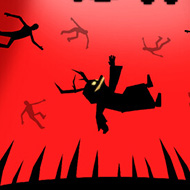

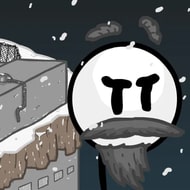

The dummy in Dude, Stop does not fight back, does not dodge, and does not care what happens to it — which turns out to be the entire design philosophy behind the game. It just hangs there, held up by ropes, waiting for you to figure out which one to cut first.
| Genre | Physics Puzzle |
| Stages | 45 |
| Objective | Destroy the ragdoll dummy using rope-cutting and level hazards |
| Platform | Browser, mobile, tablet (HTML5) |
Every stage in Dude, Stop hands you a ragdoll dummy suspended by one or more ropes above a set of hazards, and your only tool is a pair of scissors that cuts whatever rope you tap. Cut the wrong one, or cut at the wrong moment, and the dummy just swings harmlessly out of range of anything dangerous — which means half the puzzle is reading the layout before you touch anything.
The Toolkit Dude, Stop Gives You
- Crushing blocks that need precise drop timing to land a hit
- Lasers that only damage the dummy if it swings directly into the beam
- Spinning blades positioned to catch a dummy mid-arc rather than at rest
- Arrow traps that require the dummy’s head, specifically, to pass through a narrow line
- Big magnets that pull the dummy off its natural swing path toward a hazard it wouldn’t otherwise reach
The big magnets are where Dude, Stop stops being a straightforward cause-and-effect toy and starts being a puzzle. A dummy on a short rope often can’t reach the blade or laser on its own momentum, so the magnet exists purely to redirect a swing that’s otherwise going nowhere useful — and figuring out that a stage even has a magnet solution, rather than a direct rope-cut, is where most people get stuck.
The Small Yellow Magnet Problem
Later stages introduce a small yellow magnet as an obstacle rather than a tool, and it does the opposite job: it snags the dummy mid-swing and holds it in a dead zone away from every hazard on the level. Once you know to look for it, the fix is usually cutting a second rope earlier than instinct suggests, so the dummy never drifts close enough to the yellow magnet to get caught.
- Watch the full swing arc before cutting anything — cutting on reflex is the single most common way to waste an attempt.
- Treat magnets as part of the path, not a shortcut — the intended solution routes through them, it doesn’t avoid them.
Players who’ve cleared all 45 stages generally agree the back half stops being about finding the one correct rope and starts being about timing a cut within a narrow window as the dummy swings — a shift that’s easy to miss if you cleared the early stages on instinct alone. Stages that combine two hazards, a laser and a spinning blade in the same short swing, are usually where that lesson gets learned the hard way.
By the last handful of stages in Dude, Stop, the dummy has stopped feeling like a passive prop and started feeling like the one variable you actually control — which is a strange thing to say about a character whose entire personality is refusing to move on its own. Every rope you cut is really a decision about how much of that stubbornness you’re willing to work around.
Comments
There are no reviews yet. Be the first one to write one.