


-

Hide and Luig
-

Meccha Hunt
-
Fruit Ninja
-
Toaster Dash
-
Meccha Chameleon 3
-

Meccha Chameleon 2
-

Water Color Sort
-
Stickman Chameleon
-
Paint to Hide!
-

Paint&Seek Online
-
Meccha Obby
-

Paint or Seek: Chameleon Hide Online
-

Hide ‘N Seek!
-

Paint Strike
-

Meccha Chameleon Mobile
-

A Little to the Left
-
Among Us
-

Stickman Hook
Meteor 60 Seconds







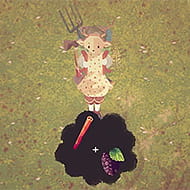
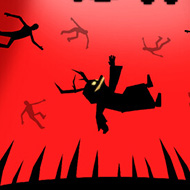



A meteor is supposedly bearing down on the planet in Meteor 60 Seconds, but the actual threat you’re dealing with, second by second, has nothing to do with the sky — it’s a rapid sequence of tiny challenges thrown at you one after another, each one lasting just long enough to react before the next replaces it.
This is a minigame collection at heart, built from the same DNA as the viral Dumb Ways to Die franchise it continues. Instead of one long game, you’re handed dozens of bite-sized challenges — tap in time, drag the right direction, avoid the wrong button — each wrapped in the same cheerful, slightly morbid visual style the series is known for, where failure is played for a laugh rather than a game-over screen.
Why the Microgame Format Works in Meteor 60 Seconds
No single challenge lasts more than a few seconds, which means the game never gives you time to settle into a rhythm before switching the rules entirely. One moment asks for a quick tap, the next demands a drag in a specific direction, and the one after that might invert the instruction just to catch players who stopped reading and started reacting on autopilot.
That constant rule-switching is the entire challenge. Reflexes alone aren’t enough — you actually have to read each prompt fresh, every single time, because the format is built specifically to punish players who assume the last challenge’s pattern will repeat.
Characters as the Connective Thread
Between challenges, the game leans on its cast of small, expressive characters to carry the tone — cheerful, a little clumsy, and rendered in the same simple, rounded art style the franchise built its identity on. Their reactions to success or failure do a lot of the game’s comedic heavy lifting, turning what could be a dry reflex test into something closer to a running gag you’re actively part of.
- Tap-based challenges testing pure reaction speed
- Directional swipe or drag challenges requiring quick reading of an on-screen cue
- Avoidance challenges where the “safe” action is deliberately the less obvious one
- Timing-based challenges where early or late input both count as a miss
Playing Solo vs. Playing With Others
While a single run works fine on your own, the format is built with the same party-game energy the franchise is known for — short enough per round that passing a device around or comparing scores afterward is a natural way to play it, even if the version in front of you is a solo browser session.
Do the challenges in Meteor 60 Seconds repeat?
Yes, but they’re shuffled and mixed with enough variety that memorizing a fixed order won’t help — recognizing the type of challenge quickly matters more than predicting which one comes next.
Is Meteor 60 Seconds difficult to pick up?
The individual challenges are simple by design, but the difficulty comes from the pace — reading and reacting correctly within a couple of seconds, repeatedly, is where the real challenge sits rather than in any single mechanic.
Does failing one challenge end the run?
Failing usually costs you rather than ending things outright, in keeping with the franchise’s tone — the humor is in the comic failure itself, not in a harsh punishment for it.
Why the Meteor Framing Barely Matters
It’s worth being honest about something: the meteor itself is mostly set dressing. Meteor 60 Seconds doesn’t ask you to manage a countdown clock or plan around an impact in any mechanical sense — the “60 seconds” framing exists to give the challenge sequence a sense of urgency and stakes, while the actual gameplay is entirely about the individual microgames themselves. Players expecting a survival-management game built around the premise will find something closer to a reflex gauntlet wearing a disaster movie’s clothing.
That’s not a criticism so much as a description of what the franchise has always been good at. Dumb Ways to Die built its reputation on exactly this kind of misdirection — a serious-sounding premise delivered through absurd, low-stakes microgames — and Meteor 60 Seconds continues that formula rather than departing from it.
What Makes a Challenge Feel Fair Even When It’s Fast
Despite the speed, very few individual challenges in Meteor 60 Seconds feel genuinely unfair on a first attempt. Each one telegraphs its input type clearly enough — a visual cue for tap, a directional arrow for swipe — that failure almost always traces back to a slow reaction rather than an unreadable prompt. That clarity is what keeps the format from becoming frustrating even as the challenges blur together at speed; you always know what killed a run, even if you didn’t react fast enough to prevent it.
Replaying for the Shuffle, Not the Story
Because there’s no overarching narrative to follow, replay value in Meteor 60 Seconds comes entirely from the shuffled order of challenges and the personal goal of extending a streak further than the last attempt. That’s a smaller hook than a story-driven game offers, but it’s a reliable one — the format is built for exactly the kind of short, repeatable sessions that a microgame collection thrives on.
By the time you’ve been through a dozen challenges back to back, Meteor 60 Seconds has stopped being about any single tap or swipe and started being about how quickly you can reset your attention between one absurd little task and the next — which, appropriately for a game built on quick reactions, is over before you’ve had time to think about it too hard.
Comments
There are no reviews yet. Be the first one to write one.