



-

Hide and Luig
-

Meccha Hunt
-

Fruit Ninja
-

Toaster Dash
-
Meccha Chameleon 3
-

Meccha Chameleon 2
-

Water Color Sort
-
Stickman Chameleon
-

Paint to Hide!
-
Paint&Seek Online
-

Meccha Obby
-

Paint or Seek: Chameleon Hide Online
-

Hide ‘N Seek!
-

Paint Strike
-

Meccha Chameleon Mobile
-
A Little to the Left
-

Among Us
-

Stickman Hook
Crazy Chameleon







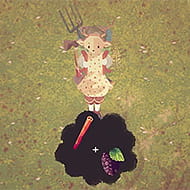



You crouch behind a sofa cushion, tap the eyedropper against the fabric, and watch your skin shift to the exact shade of faded teal. A hunter walks past, scans the room, and keeps moving. That half-second of held breath, waiting to see if the disguise holds, is the entire appeal of Crazy Chameleon.
| Genre | Multiplayer hide and seek |
| Platform | Browser (desktop, mobile, tablet) |
| Players per lobby | Up to 16 |
| Roles | Twelve chameleons, three hunters |
| Round length | 3-minute hunt |
Painting Techniques in Crazy Chameleon
The core loop is simple to describe and much harder to execute well. As a hider, you sample a colour from the environment using the eyedropper, then fill your body with it using the brush tool. Metallic and matte finishes matter more than most new players assume, since a matte chameleon pressed against a glossy countertop stands out even with a perfect colour match. Brush size adjustment lets you touch up edges instead of repainting your whole body, which saves precious seconds once a hunter is already in the room.
Beginners tend to paint once and stop, treating colour as the whole disguise. It isn’t. A flawless colour match on a bad pose still reads as an object that doesn’t belong, and hunters are trained by every round they’ve played to notice shapes, not just tones.
Undoing a bad paint job with Ctrl+Z is faster than repainting from scratch, and players who skip this shortcut waste time they don’t have once footsteps start approaching.
Reading the Room: Poses and Camouflage
Nineteen poses are available, ranging from a tucked ball to a full wall-cling, and each one is suited to specific furniture. Curling beside cushions works for sofas, lying flat suits rugs, and pressing into a picture frame is one of the more reliable tricks once other hiders have already claimed the obvious spots. Wall camouflage deserves its own mention: flattening yourself against a wall and matching its colour turns you into part of the architecture, which is why experienced hiders often abandon furniture entirely by the second round.
Early in the game, most players default to furniture because it’s visually obvious. By the time you’ve survived a few rounds, you start noticing that walls near doorways get checked less often, simply because hunters expect furniture to be the hiding spots and scan them first.
- Furniture poses: fastest to set up, most commonly checked
- Wall-cling poses: slower to sell convincingly, less scrutinised
- Frame poses: high risk, high reward near choke points
Hunting With the Paint Blaster
Playing hunter flips the entire rhythm of Crazy Chameleon. You get a paint blaster and three minutes to find twelve hiders, which sounds generous until the clock is actually running and half the room looks plausible. The real skill isn’t aiming, it’s pattern recognition: looking for the object that’s a shade off, the cushion that wasn’t quite that colour a minute ago, the shape that twitched when it shouldn’t have.
Aggressive players tend to fire the blaster at anything suspicious, burning shots on false positives. More patient hunters walk a slower loop, cataloguing the room before committing to a shot, and that patience usually pays off once the timer drops under a minute and panic sets in among the remaining hiders.
One detail only players who’ve spent real time in hunter mode pick up on: shadows sometimes give away a wall-cling before the colour does, which is why toggling shadow visibility off during your own paint job is a habit worth building.
Decoy Clones and Risky Taunts
Once you unlock clone placement, the game opens up considerably. Dropping a decoy clone near your actual hiding spot baits hunters into wasting a shot on a fake, buying you extra seconds when the round is tightest. Taunting is the opposite tool entirely: it scores bonus points but reveals roughly where you are, so it’s a move reserved for confident hiders or ones who’ve already survived long enough that a small risk feels worth it.
Competitive players lean on clones constantly. Casual players who just want to see the reaction on a friend’s face tend to taunt far more than they should, and lose rounds because of it.
Chroma, Unlocks, and the Crazy Chameleon Level Editor
Survival and scoring both feed into Chroma, the currency used to unlock coats, weapons, name tags, and taunt animations. There’s no way to buy your way into being a better hider, since Chroma only changes cosmetics, but the grind gives long-term players a reason to keep queuing beyond just the base loop. The built-in level editor is arguably underused; players who take the time to build and share their own maps get access to layouts with tighter furniture density than anything in the default rotation, which changes hiding strategy considerably.
What Divides Players About Crazy Chameleon
Not everything about Crazy Chameleon is universally loved. Smart bots fill empty lobby slots so a round always starts, but some players find bot behaviour easier to read than human hunters, which makes early wins feel less earned. Community discussion tends to circle around whether taunting is worth the exposure at all, and whether frame poses are a legitimate hiding option or a gimmick that only works on inexperienced hunters. Neither debate has a settled answer, and that’s part of why lobbies stay active.
How do you hide better in Crazy Chameleon?
Match both colour and finish, not just colour, and choose a pose that fits the object’s actual shape rather than the nearest one on the wheel. Wall-cling poses paired with shadow toggled off tend to outlast furniture poses in later rounds.
What does Chroma actually unlock?
Chroma buys coats, weapons skins, name tags, and taunt animations. It has no effect on hiding ability or hunter accuracy, so spending it is purely cosmetic progression rather than a competitive advantage.
Are decoy clones better than taunting?
For survival, yes. Clones bait a wasted shot without revealing your position, while taunting scores points at the direct cost of giving hunters a rough location, making it a late-round gamble rather than an early-round habit.
Crazy Chameleon rewards patience more than reflexes, whether you’re matching a sofa’s exact shade with the eyedropper or walking a slow, deliberate loop with the paint blaster in hand. The nineteen poses and the wall-cling trick in particular are what separate players still hiding at the three-minute mark from the ones caught in the first thirty seconds.
Comments
There are no reviews yet. Be the first one to write one.