


-
Hide and Luig
-

Meccha Hunt
-
Fruit Ninja
-

Toaster Dash
-
Meccha Chameleon 3
-

Meccha Chameleon 2
-

Water Color Sort
-
Stickman Chameleon
-
Paint to Hide!
-

Paint&Seek Online
-
Meccha Obby
-

Paint or Seek: Chameleon Hide Online
-

Hide ‘N Seek!
-

Paint Strike
-

Meccha Chameleon Mobile
-

A Little to the Left
-
Among Us
-

Stickman Hook
Fall Red Stickman







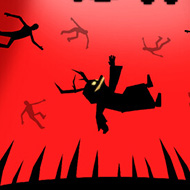


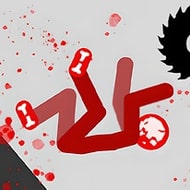
The stickman wearing the gray ball cap in Fall Red Stickman never actually dies from a single drop. He just breaks, over and over, and the run only counts once his bones have cracked in enough places to add up to real points.
Each level is a straight walk toward a drop-off zone, a set of stairs, or a chasm, and a single tap sends him forward. What happens after that tap is where the whole game lives, since the physics decide how many bones snap and how far he tumbles before landing.
Ten Falling Environments in Fall Red Stickman
The game is split across ten separate environments, and reaching a new one takes real points, not just finishing the last drop. The second environment opens once a player has racked up 1,000 star points from earlier falls, and the number climbs sharply from there.
By the last environment, the threshold sits at 40,000 star points, which forces players to actually get good at chaining damage instead of coasting through easy falls. Every environment adds tighter stairwells, longer chasms, or obstacles positioned to catch a limb mid-fall.
Early environments feel almost too simple, which is part of the design — new players walk the stickman straight off a ledge and assume that’s the whole game, only to realize the real scoring comes from how he lands, not just that he falls.
Star Points and the Booster Shop
Star points earned from damage don’t just unlock new environments, they also buy boosters from a shop menu accessible before each run. There are nine boosters total, each aimed at increasing how much damage a single fall can rack up.
- Up arrow booster – launches the stickman higher so he drops from greater height
- Banana peel booster – makes him slip mid-stride for an extra unpredictable tumble
- Bomb booster – detonates for a burst of extra fracture damage on impact
Spending points on boosters instead of saving toward the next environment is a real tradeoff, and players debate it constantly in comment sections. Some argue boosters pay for themselves through bigger scores, while others stick to raw stairwell falls and save every point for unlocking new environments outright.
What Beginners Get Wrong Early On
New players usually mash the forward tap as fast as possible, assuming speed alone maximizes damage. It doesn’t; a stickman that reaches the drop-off too quickly often falls cleanly instead of catching an edge or clipping an obstacle, which produces a disappointingly low score.
The other common mistake is burning every booster on the very first environment. Since boosters cost the same star points needed to unlock new levels, a player who spends recklessly early can stall out unable to afford the next environment at all.
Timing the tap so the stickman clips a stair edge, rather than sailing clean off it, is the single technique that separates high scores from mediocre ones once players notice it.
Scoring Bone Damage in Fall Red Stickman
Points come from how many individual fractures a fall produces, not from how far the stickman travels or how long the run lasts. A short drop that snaps three limbs against a railing can outscore a long fall that lands clean.
This is why the ten environments in Fall Red Stickman scale on total points rather than levels completed, and why the 40,000-point final environment feels genuinely earned rather than handed over after a set number of runs.
Players comparing scores in comment sections tend to focus on which environment produced their best single run, since a lucky combination of a banana peel slip into a stair edge can spike a score far above the average fall.
Ragdoll Physics That Make Every Run Different
The physics engine driving every fall is deliberately loose, so the same tap timing rarely produces the same result twice. That inconsistency is honestly divisive among players — some find it thrilling since no run ever feels scripted, while others get frustrated when an identical setup produces wildly different damage.
Community chatter around the game leans heavily on comparing gruesome outcomes, screenshotting whatever twisted landing produced the highest fracture count. That focus on the physics comedy is a big part of why the game keeps getting passed around rather than played once and forgotten.
Fall Red Stickman rewards patience with its randomness rather than fighting it, and once a player accepts that the gray-capped stickman is never going to fall the same way twice, chasing that 40,000-point final environment starts to feel less like grinding and more like collecting stories.
Comments
There are no reviews yet. Be the first one to write one.