


-

Hide and Luig
-

Meccha Hunt
-

Fruit Ninja
-

Toaster Dash
-
Meccha Chameleon 3
-

Meccha Chameleon 2
-

Water Color Sort
-
Stickman Chameleon
-
Paint to Hide!
-
Paint&Seek Online
-
Meccha Obby
-

Paint or Seek: Chameleon Hide Online
-
Hide ‘N Seek!
-

Paint Strike
-
Meccha Chameleon Mobile
-

A Little to the Left
-

Among Us
-

Stickman Hook
Geometry Dash









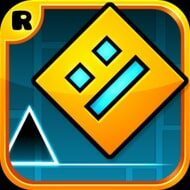
Geometry Dash drops you into Stereo Madness with one cube, one lane of spikes ahead, and a rule that never changes: touch the wrong pixel and the run ends instantly, no matter how far you’d gotten. That single condition defines every level that follows, from the first easy stage to the extreme demons the community spends months learning to survive.
| Genre | Rhythm Platformer, Arcade |
| Core Mechanic | One-touch timing synced to music, instant death on contact |
| Official Levels | 21 main levels from Stereo Madness to Fingerdash |
| Game Modes | Cube, Ship, Ball, UFO, Wave, Robot, Spider, Swing |
| Difficulty Range | Auto and Easy through Extreme Demon |
| Extra Content | Level Editor, Vault of Secrets, Gauntlets, Daily Level |
Eight Game Modes and How Each One Handles Timing
Every level swaps between forms that demand a different kind of input, and reading the transition between them separates a smooth run from a panicked one. The Cube jumps with a single tap. The Ship flies, holding to ascend and releasing to drop, turning tight corridors into constant small corrections.
The Ball flips gravity with each tap instead of jumping, the UFO hops in discrete pulses that punish held inputs, and the Wave commits to a diagonal line the instant you press and hold. The Robot jumps with variable height based on hold duration, the Spider teleports instantly between ceiling and floor, and the Swing alternates gravity in a pendulum motion unlike anything around it.
Levels rarely stay in one mode for long, and a portal switching you from Ship to Wave mid-obstacle is usually where new players lose their first attempts. Recognizing an upcoming portal before you reach it, rather than reacting after the mode already changed, marks an experienced player.
The Difficulty Ladder from Auto to Extreme Demon
Every level carries a difficulty face, voted on by the community once uploaded, ranging from Auto and Easy through Normal, Hard, Harder, and Insane. Demon-rated levels sit above all of them, and within that ten-star rating there are five further tiers players use constantly: Easy, Medium, Hard, Insane, and Extreme Demon.
The jump between Insane and even an Easy Demon is where most casual players stop progressing, since it demands consistent, near-frame-perfect timing rather than general familiarity with the controls. Extreme Demons sit on a separate community Demonlist, ranked against each other by difficulty rather than simply flagged as hard.
Newer players often assume star count alone tells them what to expect, but two ten-star demons can feel completely different depending on whether the difficulty comes from raw speed, memorization, or dense clicking sections.
Practice Mode and the Art of Chipping Away a Level
Practice mode is where most demons actually get beaten. It lets you drop checkpoints anywhere in a level and rewind to the last one on death, breaking an unforgiving level into short, learnable segments without it counting toward your stats.
The common approach is isolating a ten or twenty second section, running it until it’s consistent three times in a row, then moving the checkpoint forward. Skipping this and spamming attempts from the start is the biggest mistake beginners make on anything above Hard difficulty.
Once a level is memorized in practice mode, the harder task begins: reproducing that consistency in a normal run with no checkpoints, where one mistimed click anywhere sends you back to square one.
Stereo Madness Through Fingerdash: How the Official Levels Escalate
The 21 official levels escalate clearly. Stereo Madness and Back on Track ease new players into cube and ship timing, while Clutterfunk and Theory of Everything bring faster mode-switching and denser obstacles. By Deadlocked, the game asks for reflexes that community-made Insane levels demand, and Fingerdash closes the set with a spike that surprises players who assumed the built-in levels stayed easy.
Each official level also hides three secret coins, and collecting all of them across the set unlocks additional content rather than being just a completionist flex.
Secret Coins, the Vault, and Hidden Paths
Secret coins are tucked behind fake walls, disguised as background decoration, or reachable only by breaking from the obvious path at a specific moment. Finding them usually means slowing down and pressing into a wall that looks solid but isn’t, since the game rarely marks these routes visually.
Collected coins feed into the Vault of Secrets, unlocked with codes found through play, and opening it rewards new icons and colors rather than anything changing the underlying gameplay. Players who enjoy exploration alongside the reflex challenge tend to get the most out of hunting them down.
New players often finish a level once and assume they’ve seen everything, missing that a wall a few seconds into Base After Base or Cycles might hide a coin route entirely separate from the main path.
The Level Editor and What Community Levels Demand
The built-in editor is where the game’s real longevity comes from. Placing blocks, triggers, and color changes by hand lets creators build levels far denser than anything official, and uploading them makes those levels playable by anyone browsing the level search.
Famous community levels like Bloodbath and Tartarus are held up as benchmarks of Extreme Demon design at its most punishing, dense clicking sections layered over precise wave and ship segments that took months to build and verify. Sight-reading a level like that on a first attempt is close to impossible; players study them in fragments the same way they’d study a practice run of any other demon.
This is where the community’s divide shows up most. Some view editor-made Extreme Demons as the true endgame of Geometry Dash, while others find the drift toward memorization-heavy, minutes-long levels less satisfying than the tighter, musical official stages the game started with.
Gauntlets, Daily Levels, and Other Curated Runs
Beyond individual uploads, the game groups community levels into themed Gauntlets like the Fire, Ice, Poison, and Shadow Gauntlets, each bundling levels around a shared difficulty band and visual theme. A rotating Daily Level and Weekly Demon give players a fresh, curated challenge instead of searching the level browser blind.
These curated modes matter for a specific player type: someone who enjoys the difficulty of Geometry Dash but doesn’t want to sift through thousands of uploads of inconsistent quality to find something worth their time.
What Makes Geometry Dash Feel Different From Other Rhythm Platformers
Music timing is baked into level design rather than layered on top of it. Obstacle spacing follows the beat closely enough that experienced players describe good levels as ones you can almost predict by ear, part of why the game holds up on repeated attempts of the same short section without feeling like pure memorization.
The other defining trait is how much of the actual content comes from players rather than the base package of 21 levels, so the difficulty ceiling has effectively no top; there’s always a harder Extreme Demon being verified by someone chasing a spot near the top of the Demonlist.
Frequently Asked Questions About Geometry Dash’s Hardest Levels
- What’s the difference between a Demon and an Insane level? Insane is the hardest non-Demon rating, but Demon levels sit above it entirely, requiring near-frame-perfect timing across long stretches rather than the more forgiving margins Insane levels usually allow.
- What is the Demonlist and how does it work? The Demonlist is a community-maintained ranking of Extreme Demon levels ordered by verified difficulty, separate from the in-game star system, tracking which uploaded levels are hardest relative to each other.
- Do you need to buy the practice checkpoints separately? No, practice mode with placeable checkpoints is built into every level from the start, and it’s the primary tool players use to break down both official levels and community Extreme Demons into learnable chunks.
Whether you’re chasing a secret coin in Base After Base or grinding a demon like Tartarus one checkpoint at a time, Geometry Dash keeps its core promise from the first cube jump onward: the rules never soften, and getting better means surviving one more second than last attempt.
Comments
There are no reviews yet. Be the first one to write one.