












Boxing Random









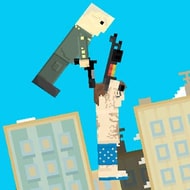




What happens when the rocket punch you were counting on to finish the round sails wide, spins your own ragdoll head over heels, and leaves you flopped against the ropes while your opponent lines up the winning hit? That’s the moment Boxing Random is built around — a boxing game where the punches are only half in your control and the physics engine gets the final say.
| Genre | Physics-based ragdoll boxing |
| Platform | Browser |
| Players | 1 versus AI, or 2 local |
| Core Mechanic | One-button ragdoll punching with randomized round modifiers |
| Win Condition | First fighter to land 5 points |
One Button, Total Chaos: The Core Mechanic in Boxing Random
Every action comes from a single input. Press it and your fighter jumps, lunges, and swings at once, and where that swing lands depends on momentum, jump angle, and a ragdoll skeleton that doesn’t care what you intended. Landing a clean shot on the opponent’s head scores a point, and the first fighter to reach 5 points wins.
Beginners usually fight the physics instead of using them, mashing the button and hoping for contact. Players who’ve put real time into Boxing Random talk about timing the jump arc instead, releasing input at the peak of a hop so the glove swings downward into the head rather than flailing sideways. That one adjustment usually separates a player stuck at one or two rounds won from one who closes out matches consistently.
Once a match reaches four points to three, most players tighten up and play safer instead of committing to a risky swing. It’s a small shift, but a noticeable one — chaotic openings give way to something closer to actual boxing.
Modifiers That Rewrite Every Round in Boxing Random
Long Arms stretch your reach across most of the ring, but make it harder to pull a glove back in time to block, so an opponent who closes distance quickly punishes the extra extension. Tiny Heads shrink the hitbox you’re aiming for, turning a clean hit into a genuine accuracy test. Rocket Gloves replace your fists with rocket-propelled punches that score an instant point on contact but fly in a wide, hard-to-aim arc, so committing to one is a gamble most players only take while behind.
Slippery arena floors and shifting gravity settings show up just as often as character modifiers, changing footing entirely — a fighter dominating with Long Arms on solid ground can suddenly overshoot every swing once the floor turns to ice. Once a Rocket Gloves round loads in, players already ahead tend to play conservatively rather than gamble on the wide arc.
That randomness is exactly what the game promises every round, and it’s also the most divisive part of the design. Some players love that no lead ever feels safe, while others find it frustrating to lose a comfortable lead to a modifier they couldn’t prepare for.
Reading the Ring When Physics Won’t Cooperate
Because the ragdoll skeleton reacts to every hit with real momentum, getting knocked toward the ropes isn’t cosmetic — a fighter tangled against the edge takes longer to recover into a swing-ready stance, and a sharp opponent chases that opening immediately. Watching for that stagger window, instead of swinging on cooldown, separates a new player from someone with real hours in Boxing Random.
Sound cues matter more than most players expect. The distinct thud of a clean head shot lands differently than a glancing hit off an arm, and regulars react to that sound before the point counter updates.
Corner positioning becomes its own skill once both fighters are still standing at four points apiece. Backing an opponent into a corner limits their escape, but it also limits yours if Long Arms favors whoever swings first.
Solo Play Against the AI vs Local Multiplayer
Single-player mode pits you against an AI tuned to roughly your own skill level, a reasonable place to learn jump-swing timing without a second unpredictable ragdoll in the ring. It’s the mode casual players open first, treating each modifier as a small puzzle before ever facing a friend.
Local two-player matches are where Boxing Random earns its reputation as a party game, since two people fumbling through the same Tiny Heads round on one screen produces more laughing than tension. Competitive-minded players still find an edge here, agreeing to skip modifiers they consider unfair before a set.
Switching between the two modes changes how forgiving the game feels. The AI rarely punishes a missed swing as hard as a real second player does, so solo-only practice sometimes ends in a rude surprise against a friend who already knows the stagger window.
Whether you’re chasing a clean 5-0 shutout or just surviving a round of Rocket Gloves without embarrassing yourself, Boxing Random keeps returning to the same tension — you press the button, but the ragdoll decides how the story ends.
Comments
There are no reviews yet. Be the first one to write one.