


-

Hide and Luig
-

Meccha Hunt
-

Fruit Ninja
-

Toaster Dash
-
Meccha Chameleon 3
-

Meccha Chameleon 2
-

Water Color Sort
-

Stickman Chameleon
-
Paint to Hide!
-

Paint&Seek Online
-
Meccha Obby
-

Paint or Seek: Chameleon Hide Online
-

Hide ‘N Seek!
-

Paint Strike
-
Meccha Chameleon Mobile
-

A Little to the Left
-

Among Us
-
Stickman Hook
SuperSorry










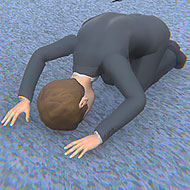
SuperSorry sounds like it should be a board-game riff, something built around apology cards and knocking pieces back to start. What actually loads is a leaner, more physical kind of action game — a side-scrolling brawler where movement and momentum matter more than any card ever would.
Built on Unity’s WebGL engine, SuperSorry keeps its core loop tight: move your character through a stage, close the distance on whatever’s in your way, and clear it with a kick-based attack rather than a weapon. There’s no inventory screen, no crafting menu, no layer of systems stacked on top of the basics — just movement, timing, and a target in front of you.
The Kick Is the Whole Toolkit in SuperSorry
Spacing decides more than raw speed does. Because the primary attack is a kick with real reach and a real windup, closing distance carelessly tends to leave you exposed at the exact moment you’re mid-swing. Players who’ve spent time with kick-focused browser action games generally develop the same habit here — approach at an angle, commit to the attack only once the target’s pattern is read, and back off rather than trading hits blindly.
That simplicity is really the point of games built this way. SuperSorry isn’t trying to be a deep combat system with combo trees and unlockable moves; it’s a small, physical action game where the entire skill ceiling is timing your one real tool correctly against whatever the stage throws at you.
What a Game This Small Gets Right
There’s an honesty to a browser action game that doesn’t pretend to be bigger than it is. SuperSorry runs light, loads fast, and doesn’t ask for a tutorial longer than the movement and kick controls themselves — which is exactly the kind of design that works for a quick session rather than a long commitment.
What’s harder to pin down from the outside is exactly how much content sits behind that opening stage, since games built this leanly don’t always advertise their full scope up front. What’s clear from actually playing it is the core feel: momentum-based movement, a kick that rewards patience over spam, and a stage layout that punishes rushing in without reading what’s ahead first.
For a game whose title suggests a board game and delivers a physical action game instead, SuperSorry is a reminder that browser games rarely play out exactly the way their name implies — and sometimes the mismatch is the most interesting thing about opening one up.
What Unity WebGL Action Games Trade Away
Games built quickly on Unity’s WebGL export tend to share a family resemblance — light install footprint, immediate playability, and a scope that stays deliberately narrow rather than trying to compete with a full retail release. SuperSorry fits that mold closely. There’s no persistent progression system layered on top of the kicking, no currency to grind, nothing asking for a second session beyond whatever momentum the first one built on its own.
That narrowness is a trade-off rather than a flaw. A browser action game this size lives or dies on whether its one core mechanic feels satisfying to repeat, and SuperSorry’s kick — with its real windup and real reach — is built specifically to reward players who slow down and read an opponent’s position rather than mashing toward them.
Judging a Game by What It Doesn’t Try to Be
It’s tempting to measure a small action game against bigger, more systems-heavy titles in the same genre, but that’s the wrong comparison for something like SuperSorry. It isn’t trying to be a deep fighting game with a roster and a combo trainer — it’s trying to be a five-minute browser session that respects your time and gets out of the way once you’ve had your fill of kicking through a stage.
Judged on those terms, SuperSorry does what it sets out to do. The kick has weight, the movement has momentum, and the lack of anything more elaborate stacked on top isn’t really a gap so much as a decision about what kind of game this was always meant to be.
Comments
There are no reviews yet. Be the first one to write one.