


-
Hide and Luig
-

Meccha Hunt
-
Fruit Ninja
-
Toaster Dash
-
Meccha Chameleon 3
-
Meccha Chameleon 2
-

Water Color Sort
-
Stickman Chameleon
-
Paint to Hide!
-
Paint&Seek Online
-
Meccha Obby
-

Paint or Seek: Chameleon Hide Online
-
Hide ‘N Seek!
-
Paint Strike
-
Meccha Chameleon Mobile
-
A Little to the Left
-
Among Us
-
Stickman Hook
Geometry Dash: Odyssey


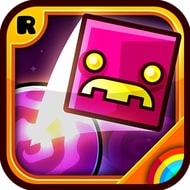
What happens when a rhythm platformer asks you to jump on the beat and the beat refuses to wait? Geometry Dash: Odyssey puts that question to you within seconds, because the cube slides forward on its own and every input has to land on time. With steering removed, the entire challenge lives in a single tap, which sounds easy right up until the first spike.
Auto-Run Basics in Geometry Dash: Odyssey
The cube never stops moving, so you only decide when to leave the ground. A tap or hold sends it upward, gravity pulls it back, and the next spike or block is already approaching at a fixed speed. That fixed speed is what makes the game readable: once you learn how far one jump carries, every gap becomes a distance you can judge by eye.
Most players first meet the progress bar, which fills from 0 to 100 percent as the level scrolls past. Dying at 12 percent teaches almost nothing, but dying at 94 percent shows exactly where your timing broke.
The attempt counter climbs fast, and that is part of the identity of the genre rather than a sign you are doing badly. Rhythm-game players usually adapt quickest, since the music acts as a metronome and the obstacles are laid out to match it.
Portals, Orbs and Pads
Spikes and blocks are only the start. Levels in this style use portals to change what your icon is, so the same tap that lifted a cube a moment ago may now push a ship upward only while held, or flip gravity entirely. Orbs and pads add extra lifts that either launch you automatically or ask for a tap at exactly the right instant.
- Jump pads fire the moment you touch them, with no tap required.
- Orbs only work if you tap while overlapping them, so a missed tap means a missed boost.
- Portals change the icon or gravity before you can react, so read the next section as you enter.
The honest complaint players raise is that some transitions arrive with little warning, and a ship stretch right after a cube section can feel like a different game for a few seconds. Memorizing portal placements, rather than reacting to them, is how most players get through.
Spamming the tap on every obstacle is the other classic trap. Rhythm levels reward one clean click per beat, and mashing usually pulls you off the music by the second spike.
How Difficulty Climbs Through the Ship Stretches
Early in the game, spikes sit apart and the cube has room to land between them. Once ship stretches appear, the rules change: holding rises, releasing falls, and tiny taps keep you level inside tight corridors. If a level includes a wave section, its sharp diagonal movement makes even confident cube players feel their hands tighten.
- Clear single spikes with one tap each and learn the cube’s jump arc.
- Handle clusters of two or three spikes with one longer hold instead of two taps.
- Link vehicle sections such as the ship, then return to the cube without losing the beat.
Speed matters too. Faster stretches shrink the reaction window until memorizing the click pattern beats reacting to the screen, which is why strong players talk about patterns instead of obstacles.
Players who love a hard grind enjoy this slope, while casual players often stall at the first speed-up. That split is among the most debated parts of the genre.
Practice mode is the habit most newcomers skip. It drops checkpoints as you go, so a failed jump sends you back a few seconds instead of to the start, and you can rehearse a hard stretch as often as you need without touching the attempt counter.
Comparing against the original Geometry Dash is worth doing in your first two minutes. Check whether the cube’s jump height, the speed and the soundtrack feel familiar, because level lists and difficulty differ between variants, and you will want to know what to expect before committing to a long run.
Completionists tend to switch back to normal runs once a section feels automatic, since only a full run from the start counts toward finishing a level.
Common Questions About Geometry Dash: Odyssey
How do you get through ship sections?
Treat the ship as a controlled glide: hold to rise, release to fall, and use short taps to stay level inside narrow corridors. Players who overcorrect with long holds hit the ceiling spikes, so smaller inputs nearly always win.
Is practice mode worth using?
Yes, because practice mode places checkpoints that let you drill a single stretch of spikes, orbs and portals without restarting the whole level. Switch back to normal runs once the pattern feels automatic, since only a normal run counts toward completing the level.
Why does the cube keep dying right after a portal?
Portals change gravity or icon the instant you pass through, so the first tap afterward behaves differently than expected. Look one section ahead before you reach the portal and decide on your first input in advance, since a late reaction at that moment is the most common cause of a death.
Geometry Dash: Odyssey rewards the player who treats each level as a piece of music with spikes in it, learning where every portal and orb falls before trusting reflexes. Once the ship stretch stops feeling like a wall and the attempt counter finally rolls past your old best percentage, the cube starts moving as if it were following your pulse.
Comments
There are no reviews yet. Be the first one to write one.