



-

Hide and Luig
-

Meccha Hunt
-

Fruit Ninja
-

Toaster Dash
-
Meccha Chameleon 3
-
Meccha Chameleon 2
-

Water Color Sort
-

Stickman Chameleon
-

Paint to Hide!
-

Paint&Seek Online
-

Meccha Obby
-

Paint or Seek: Chameleon Hide Online
-

Hide ‘N Seek!
-

Paint Strike
-

Meccha Chameleon Mobile
-

A Little to the Left
-

Among Us
-

Stickman Hook
Meccha Chameleon vs Hide Online: Comparing the Best Camouflage Multiplayer Games
Camouflage-based hide-and-seek games occupy a strange but enduring corner of multiplayer gaming, and two of the most recognizable names for very different audiences are Meccha Chameleon, the 2026 Steam breakout from solo developer lemorion_1224, and Hide Online, the long-running mobile and PC action-shooter from Russian studio HitRock Games. Both games ask one team to disguise itself as part of the environment while the other hunts them down, but they arrive at that idea from almost opposite directions — one built around a paintbrush and artistic nuance, the other built around fast-paced shooting and object transformation. Here’s a full breakdown of how they stack up.
Two Games With Very Different Histories
Hide Online has been around for years as a free-to-play mobile and PC title, built by an established studio with a live-service model: regular content drops, ad support, and an in-app purchase economy built around skins and weapons. It’s a mature product with a large, long-standing player base spread across Android, iOS, and PC. Meccha Chameleon is the opposite kind of story — a single $5.99 Steam release from a solo Japanese developer that went from a quiet launch to tens of millions of copies sold within weeks, driven almost entirely by clips and word of mouth rather than a marketing budget or platform push. That gap in scale and history shapes almost everything else about how the two games are built and supported.
Two Different Takes on Camouflage
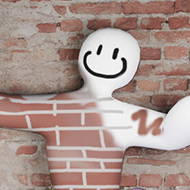
Hide Online puts players into the classic “morph into any object” formula: Props can transform into furniture, household items, or other scenery scattered across a map, then must avoid detection while armed Hunters sweep the level. Meccha Chameleon takes a slower, more deliberate approach — players keep their humanoid shape and manually paint their bodies to match a surface, relying on posing and color accuracy rather than swapping into a pre-made object model.
- Hide Online: Instantly morph into an existing object on the map
- Meccha Chameleon: Freehand paint your body to visually match the surroundings
Combat Intensity: Full Shooter vs Limited Ammo
Both games ask the seeking side to shoot rather than just tag, but the intensity is very different. Hide Online is explicitly built as an action-shooter first: Hunters carry machine guns and sweep the map firing at anything that looks suspicious, giving matches a fast, twitchy energy closer to a shooter with a disguise gimmick bolted on. Meccha Chameleon’s Hunters also have to land a physical shot to eliminate a Hider, but they do it in first-person with no flashlight and a limited, host-configurable ammo pool — missing costs ammo, and if every Hunter runs dry before time runs out, the Hiders win the round outright. The result is a much slower, more deliberate pace than Hide Online’s constant-fire approach, even though neither game is technically weapon-free.
| Feature | Meccha Chameleon | Hide Online |
|---|---|---|
| Hiding Method | Paint your body to match the environment | Morph into an existing map object |
| Combat | Limited ammo, must land a shot to eliminate | Fast-paced shooting with machine guns |
| Platform | PC (Steam) | Android, iOS, and PC |
| Price Model | $5.99 one-time purchase | Free-to-play with ads and in-app purchases |
| Customization | Paint palette, pose selection, body size options | Character skins, weapon skins, and object variety |
| Extra Modes | Infection, Double, Reverse Chicken Race | Various shooter-influenced game modes |
| Custom Content | Steam Workshop support for community maps | No user-generated map support |
| Update Frequency | Near-weekly patches from a single developer | Periodic content updates typical of a live-service mobile title |
Monetization and Accessibility
Hide Online follows the standard free-to-play mobile model: it’s free to download, supported by ads, and includes in-app purchases for skins, weapons, and other cosmetics. This makes it extremely accessible in terms of upfront cost, but the ad frequency has been a recurring complaint among players, and progression can feel slower without spending. Meccha Chameleon takes the opposite approach — a single $5.99 purchase on Steam unlocks the full game with no ads, no loot boxes, and no purchasable advantages, which fits its identity as a small, self-published indie project rather than a live-service mobile title.
- Hide Online: free download, ad-supported, optional in-app purchases
- Meccha Chameleon: one-time paid purchase, no ads, no microtransactions
The trade-off is fairly typical of free-to-play versus premium models generally: Hide Online has essentially zero barrier to entry, which matters a lot for a mobile audience used to trying several games before settling on one. Meccha Chameleon asks for a small upfront payment but, in exchange, doesn’t interrupt matches with ads or dangle paid advantages in front of players — everything you get access to is available to everyone who bought the game, regardless of how much they’ve spent beyond the initial purchase.
Platform and Play Style
Hide Online’s mobile-first design means matches are built around short sessions you can jump into anywhere, with touch controls optimized for quick rounds. Meccha Chameleon is a PC-only Steam release built around public and private lobbies, with a stated recommendation of 2 to 10 players depending on the host’s network, and an explicit design focus on streaming and viewer-participation sessions. If you’re looking for something to fill a commute or a short break, Hide Online’s mobile availability has the edge; if you’re setting up a dedicated session with friends or an audience, Meccha Chameleon’s lobby structure and streaming-friendly rules make it the more deliberate choice.
Depth of the Camouflage Mechanic
Because Hide Online relies on pre-built object models, the “disguise” is really a selection process — you pick the best available object and hope it blends into the current scene. Meccha Chameleon’s paint-based system creates a much wider range of outcomes: two players hiding on the same wall can produce completely different results depending on their color accuracy and how well they’ve matched their pose to the background’s contours. This gives Meccha Chameleon a noticeably higher skill ceiling for the hiding side specifically, at the cost of a slower, more methodical pace compared to Hide Online’s faster shooter-driven rounds.
- Hide Online rewards quick decision-making and object familiarity
- Meccha Chameleon rewards patience, color sense, and pose creativity
- Hide Online’s constant-fire combat adds reflex-based tension Meccha Chameleon’s slower pace doesn’t have
- Meccha Chameleon’s limited ammo and lack of a flashlight keep the focus on careful observation over quick trigger fingers
Content Updates and Long-Term Support
Because Hide Online is an established live-service product from a full studio, its update cadence tends to follow a more traditional mobile-game rhythm: periodic content drops tied to events, seasonal cosmetics, and balance passes, spaced out over a longer release calendar. Meccha Chameleon’s update history looks almost the opposite — extremely frequent, often several patches within a single week, ranging from tiny one-line hotfixes to substantial content drops like the addition of new official maps or a full server browser overhaul. Neither approach is objectively better, but they do produce a different experience: Hide Online feels more predictable and event-driven, while Meccha Chameleon feels more like watching a project evolve in near-real time as its solo developer responds to player reports.
Which One Fits Your Group
The better pick really depends on what kind of session you’re planning, what device you’re playing on, and how you feel about free-to-play monetization versus a flat one-time cost.
- Choose Hide Online if: you want a free, mobile-friendly hide-and-seek game with shooter mechanics, a large existing player base, and don’t mind ads or optional in-app purchases.
- Choose Meccha Chameleon if: you want a calmer, more creative hiding challenge on PC, prefer a one-time purchase over a free-to-play model, value frequent updates from a single dedicated developer, and enjoy watching or making genuinely funny camouflage attempts.
- Consider both if: you split your gaming time between mobile and PC, since the two games barely overlap in pacing despite sharing the same basic hide-and-seek premise.
Both titles prove that “become part of the scenery” is a surprisingly flexible idea for a game concept. Hide Online leans into fast, combat-driven mobile sessions with a huge object pool to choose from and years of live-service polish behind it, while Meccha Chameleon slows things down and turns hiding into something closer to a timed art challenge, backed by a solo developer shipping updates at a pace that’s unusual even by indie standards. Neither approach makes the other obsolete — they’re simply built for different moods, different platforms, and different kinds of players looking to disappear in plain sight.